Alan Walkerâs three-volume biography of Franz Liszt, which took him 25 years to complete, has been very influential. Common adjectives attached to the work include “monumental” and “magisterial” and it is said to have “unearthed much new material and provided a strong stimulus for further research”. Walker himself says that when he found, as a BBC producer compiling notes for program announcers, that “there wasn’t a decent book in English on Liszt”, he eventually decided to write one himself, but was determined “not to make a major statement that couldn’t be supported by documents …and because Liszt himself was a traveler the archives were everywhere.”
The final volume of Walker’s monumental study (Franz Liszt, Vol. 1: The Virtuoso Years, 1811-47, Franz Liszt, Vol. 2: The Weimar Years, 1848-61, Franz Liszt, Volume 3: The Final Years, 1861-1886) draws upon some recent scholarship to present a more complete picture of Liszt’s life and achievements than had been previously possible. Liszt’s remarkably peripatetic existence creates manifold challenges for the conscientious scholar but Walker is more than equal to the task. His narrative is copiously footnoted yet never seems to bog down in minutiae. In fact, quite the opposite: the prose is so lively that the reader is often swept along by the narrative. A particularly fascinating section concerns the infamous Cosima Liszt-Hans von BĂŒlow-Richard Wagner triangle, which is skillfully dissected by Walker to separate legend from accurate history. Liszt emerges as an unmistakably generous and self-effacing man in his later years whose prodigious gifts as a composer and pianist were undimmed until the very end. Walker provides frequent musical examples throughout, and his comments on them are not too technical for the general reader. Walkerâs meticulously researched and engagingly written book is well illustrated and contains numerous musical examples and insightful analyses. It is an impressive conclusion to a biography that should become the standard work on its subject.
“A conscientious scholar passionate about his subject, Mr. Walker makes the man and his age come to life. These three volumes will be the definitive work to which all subsequent Liszt biographies will aspire.”
- Harold C. Schonberg, Wall Street Journal
“What distinguishes Walker from Liszt’s dozens of earlier biographers is that he is equally strong on the music and the life. A formidable musicologist with a lively polemical style, he discusses the composer’s works with greater understanding and clarity than any previous biographer. And whereas many have recycled the same erroneous, often damaging information, Walker has relied on his own prodigious, globe-trotting research, a project spanning twenty-five years. The result is a textured portrait of Liszt and his times without rival.”
- Time Magazine
“If you want the single best study of Franz Liszt, and one at a surprisingly reasonable price at that, Alan Walker’s study is the one to get. It has won numerous awards, understandably, and can be recommended without a moment’s hesitation. It’s a long undertaking to read from 1811 (or rather, from the chapters on Liszt’s family background) to his death (and, again, the musical context of his surviving family members). But it’s also sufficiently readable to make even bedtime reading as much as responding to the work as a scholarly study. Enjoyable. Illuminating. Gripping. Definitive.”
- Classical Net
In a series of lively essays that tell us much not only about the phenomenon that was Franz Liszt but also about the musical and cultural life of nineteenth- century Europe, Alan Walker muses on aspects of Liszt’s life and work that he was unable to explore in his acclaimed three-volume biography of the great composer and pianist. Topics include Liszt’s contributions to the Lied, the lifelong impact of his encounter with Beethoven, his influence on students who became famous in their own right, his accomplishments in transcribing and editing the works of other composers, and his innovative piano technique. One chapter is devoted to the Sonata in B Minor, perhaps Liszt’s single most celebrated composition.
“If only I do not die here.” After falling ill during a visit to Bayreuth, Franz Liszt uttered this melancholy refrain throughout his final days, which were spent in rented rooms in a house opposite Wahnfried, the home of his daughter Cosima and his deceased son-in-law Richard Wagner. Attended by incompetent doctors and ignored and treated coldly by his daughter, the great composer endured needless pain and indignity, according to a knowledgeable eyewitness. Lina Schmalhausen, his student, caregiver, and close companion, recorded in her diary a graphic description of her teacher’s illness and death. Alan Walker here presents this never-before-published account of Liszt’s demise in the summer of 1886.
Some of these Symphonic Poems have also been published for piano solo, such as numbers two (Tasso, Lamento e Trionfo) and six (Mazeppa). This arrangement provided for (possible) intimate interaction between the two pianists. Taking over each otherâs melodies, delicate timing in certain passages and simultaneous, instant change of pace are all part of making or breaking this performance. Fortunately, both pianists made it absolutely clear that their ideas were performed as one.
Yingdi Sun talks to Piano Street's Alexander Buskermolen about his experiences of Liszt's music
Because this composition originated from another piano (solo) piece, you can hear that compared with the arrangement of âLes Preludesâ, Liszt found it less difficult to maintain the great pianistic elements. The techniques used here were written with a deep understanding of the instrument, very different from the âtranslationâ of an orchestra to a single instrument.
Other âquotesâ that passed by were âUn Sospiroâ S.144/3 and the âReminiscences de Don Juanâ S.418.
The last piece played before the intermission was the âDanse Macabreâ S.555 as transcribed from Camille Saint-SaĂ«nsâ orchestral work. The perfect man for the job was the youngest of the prize winners on stage: Vitaly Pisarenko. His technical capabilities were overwhelming and made his performance one to remember. The most remarkable aspect of his playing is his articulation. Although many of the passages in the Danse Macabre are very fast, all the notes came out crystal clear and highly rhythmic. If you ask me, this is how the composer himself would have played this work: virtuoso with a sense of style and a great eagerness in his relationship to the piano.
For all of our (young) readers who want to become Liszt-like âpiano lionsâ like the prize winners from the Liszt competition, Iâve asked some of them about their first experiences with the composer. Maybe this will help you on your wayâŠ
Masataka Goto: âThe first piece by Liszt that I played was number eight of his Transcendental Studies, âWilde Jagdâ. I was approximately 14 years old when I learned that piece.â
Mr. Roma had some extra advice for all the pianists who have never played Liszt before, especially if youâre not used to page after page filled with thousands of little black notes:
Igor Roma: âIt all depends on the technical abilities of the young pianist. For the really young ones/less experienced pianists, the âChildrenâs Etudesâ are quite rewarding. For the pianists who have a solid basic technique Iâd recommend studying the âConsolationsâ, which are both musically and technically very interesting. In the end technique is everything in the service of Lisztâs musical ideas.â
A personal tip from Maestro Igor Roma for more advanced students:
Igor Roma: âIn any major piece by Franz Liszt, the deep understanding and communicating of the work comes from thorough study and mental development. Iâd advise anyone to just set aside the composition for a few months or longer and take it back, in order to change perspective. In the end youâll master the composition technically and youâll find the time and space to really concentrate on the musical gestures.â
âMany of these pieces, especially the later ones, are quite difficult to understand. They were composed in a very dark period of Lisztâs life. This introverted, depressed attitude is always present and difficult for the performer to fully comprehend.â
Igor Roma: âI have the feeling that many of the later pieces by Liszt are highly underrated. To name one in particular: âReminiscences de Simon Boccanegroâ. Simon Boccanegro is a very special opera by Verdi that Liszt transcribed for the piano.â
And more!
Some of the pianists gave us another peek into their world full of Liszt…
What role did the music of Franz Liszt play in the development of your studies and career?
Yingdi Sun: âAfter becoming acquainted with Liszt at a young age, I kept playing and learning new compositions all the way through my teenage years and my time at the conservatory. Iâve noticed that I âgrew from one piece into the nextâ. After my first couple of pieces I started to learn the b minor sonata, some of the Petrarca Sonettes and of course his Hungarian Rhapsodies. Being a music student at that time, I had to play many different composers as well. Even in recent years, after winning the Liszt Competition in 2005, I have kept on playing many different composers such as Brahms, Ravel and Beethoven. Logically, Franz Liszt has a prominent position in my life.â
Igor Roma: âI began to realize that even though I âmetâ Liszt at a late age, I really liked the physical and poetic attitude of the composer. In other words, I felt really at ease with the kind of sound and piano technique playing Liszt requires. That doesnât mean itâs easy to play of course!â
Why did you decide to enter the Liszt Competition specifically?
Igor Roma: âI decided to enter the Liszt Competition in particular because of my special and most of all natural connection to the composer. I thought this competition would suit me well, and it did!
Masataka Goto: âEver since I started to play the piano at the age of four I loved the music of Franz Liszt. Later I realized this music demands a very energetic approach. I thought it would be very useful to learn as many of his pieces as possible at a young age. Entering a competition thatâs all about Liszt gave me the perfect push to do just that.â
Which particular aspects of Lisztâs music stand out to you personally and respond to your qualities as a musician?
Yingdi Sun: âI feel thereâs a strong connection between the music of Liszt and Beethoven. I find it especially useful to study their late works. I think the main difference in the way both composers used the entire keyboard is in the balance between the different registers. Beethoven, being deaf at that period in his life, was clearly struggling to find the balance in dynamics and use of different areas of the keyboard. Franz Liszt, although more introvered at the later point in his life, found a better balance in these same aspects. I personally feel more connected with Lisztâs approach to the piano than Beethovenâs.â
How has winning the Liszt Competition influenced your choice of repertoire over the years? Are you expected to play Liszt all the time?
Igor Roma: âIn a year such as this, THE Liszt year, concert organizers obviously expect me to play a lot of Liszt pieces. Any other year I like to play as many different composers as possible, especially post-romantic and 20th century composers. Also, I donât feel like an expert on Liszt, or on any other composer for that matter.
Masataka Goto: âWhen I entered the Liszt Competition this year I played the first Ballade, a piece thatâs not often performed. I think itâs a wonderful composition! Iâm not a very big fan of his later works, maybe this will come later. For now I love playing his highly energetic compositions.â
The concertâs finale was an arrangement for five pianos and nine pianists of Lisztâs orchestral work, the RĂĄkĂłczi-Marsch S.652b. Again Mr. Pace took on the role of conductor and led the rest of the pianists towards the final notes of the evening: a great ending of a great birthday concert, not only for Franz Liszt, but for all those that were present that evening. Thank you Liszt Competition Utrecht!
Play Video: Igor Roma in the final stage of the Liszt Competition Utrecht in 1996: Totentanz
Play Video: Vitaly Pisarenko in his final stage of the Liszt Competition in 2008: 1st Piano Concerto
About the International Franz Liszt Piano Competition
The International Franz Liszt Piano Competition is held every three years in Utrecht. This event has a reputation as one of the worldÂŽs most prestigious piano competitions, and is also known for the thorough and professional support it offers young musicians.
The Competition is entirely devoted to the piano works of Franz Liszt. This exclusive approach and the Competitionâs programme of extensive career support, as well as the many international concert engagements it makes possible for its Prize winners, have given the International Franz Liszt Piano Competition a unique profile.
Today, October 22 2011, marks the 200th birthday of Franz Liszt, the greatest piano virtuoso of his time, inventor of the modern piano recital and one of the most influential composers of the 19th century.
Piano Street here presents a collection of material and links to resources for you to enjoy in order to commemorate the great Franz Liszt.
Happy birthday, Franz!
Consolation no 3
Liszt’s six Consolations were inspired by a set of poems of the same name by the French author and literary critic Charles Augustin Sainte-Beuve.
They were composed in 1849-1850, in the beginning of Lisztâs most productive period, when he had only recently abandoned the concert stage, persuaded by his lover Carolyne zu Sayn-Wittgenstein to concentrate on composition.
The most well-known piece in the set is No. 3, clearly inspired by the Nocturnes of Chopin, who had died in October 1849.
Earlier this year we ran a survey among our members, asking which piano pieces they consider the most enjoyable and beneficial. Hundreds of piano students of all levels, teachers and pianists have submitted their answers and the results of the survey will be published later this year.
When looking at only Liszt music, the result coincides with the download statistics from Piano Street’s sheet music library:
There are four of Liszt’s piano pieces which are significantly more popular than his other pieces. The Consolation no 3 (above) is one of these four, but our question to you is:
Which are the other three pieces?
Note that the correct answer is based on preferences of Piano Street’s members, which does not necessarily reflect the view of a general public.
Send your answer to webmaster@pianostreet.com (use subject “Liszt Challenge”) before October 31.
Among those who submits the correct answer we will draw five winners who receives a 1 Year Piano Street Gold membership (value $47).
UPDATE
The correct answer is:
La Campanella, Liebestraum no. 3 and Hungarian Rhapsody no. 2
Winners: Judith Lanham, Luis Manuel, Brian N, Minh Anh Nguyen Vu and Dick Hill
Join the celebration: Send your greetings to Franz or share you comments, favourite Liszt-links or personal thoughts about Franz Liszt and his music in a blog comment!
/nilsjohan
In order to attract extra attention to the international Liszt year 2011 celebrations, Piano Streetâs Patrick Jovell assisted by Alexander Buskermolen had the unique opportunity of speaking with internationally renowned pianist KlĂĄra WĂŒrtz. An international competition prizewinner with numerous notable recordings for the Brilliant label, Ms. WĂŒrtz was born and trained in Hungary and graduated from the Ferenc Liszt Academy in Budapest as a student of ZoltĂĄn Kocsis, Ferenc Rados and György KurtĂĄg. Ms. Wurtz is also a Professor at the Utrecht Conservatory (Hogeschool voor de kunsten) in The Netherlands.
PJ: We are very happy to have a chance to speak with you about your relationship to the work of Franz Liszt. To the world, he is one of the most versatile and interesting personalities in Western art music, but to you he is also a compatriot. Could you please elaborate on these two sides of Franz Liszt?
PJ: In media discussions all over the world, including the talk between Barry Douglas and Leslie Howard on the BBC, it is obvious that the worldâs opinion of Liszt has undergone a tremendous transformation during the last thirty years. From being known as a shallow virtuoso showman he is now considered a deeply thoughtful and perhaps the most omni-conscious and knowledgeable composer of the Romantic era. What has allowed this change to take place?
KW: I feel that Liszt’s works were highly revolutionary, both technically and musically. It’s true that for the earlier part of his life Liszt was more of a performance focused musician/pianist, who gained fame simply because of his incredible and unique capabilities at the piano. After maintaining this lifestyle for about ten years, he felt this path didn’t bring him sufficient satisfaction either as a composer or as a performer. He simply quit his role as a ‘circus-like’ artist, and went on to become the unparalleled musician we know he really was. I sincerely believe the transcendental qualities in his performances are unrivalled, even on today’s concert stage.
Having said that, I believe something in Liszt’s compositions has created both strong enthusiasts and strong, more negative opinions. I find that these attitudes do not do justice to the great and important musician he was. His music, in my opinion, is universal. In the end, the qualification of (his) music always depends on the eye (ear) of the beholder. The simple fact that there are so many Liszt competitions (just as there are Chopin competitions) around the world shows what great a composer Liszt truly was. He still challenges pianists to explore the technical boundaries of the instrument. In other words, as a pianist you can’t get around the oeuvre of this composer.
PJ: What areas do you find most interesting in Liszt’s piano music and why?
KW: Regrettably I don’t play as much Liszt as I’d like to. I think that by playing more of his works I’d learn a great deal more about the piano and music in general. I do feel his musical language is close to my heart. Then again, it’s deeply connected to the music of Bach, Beethoven and later, BelĂĄ BartĂłk. It needs to be said that Bartok’s music is easier for me to understand exactly because I’m Hungarian. It’s not, however, a free ticket to fully grasp the content of his compositions.
PJ: Hungary has a remarkably rich and strong tradition with outstanding musicians, composers and pedagogical impact. You recorded BartĂłkâs third piano concerto in 2009. Is there a trace of Liszt in modern Hungarian composers via KurtĂĄg and until today? If so, in what sense?
PJ: Franz Liszt was a renowned teacher, with students (400) all over the world. They eventually also held major positions at conservatories in almost every country. Scholars also like to compare the methods of Chopin and Liszt. Is it possible to talk about a Liszt method in piano pedagogy today?
KW: I don’t think you can say there’s a specific Liszt methodology today. We know he taught a lot of students, and that many of his students became excellent pianists/performers and/or teachers themselves. I believe people like BartĂłk and Dohnanyi had a greater influence and legacy on piano pedagogy. There’s a big difference between pedagogic qualities in general and the (revolutionary) qualities of his compositions.
PJ: For a pianist, playing Liszt is extremely developmental. Do you have advice on what pieces could be used for a student’s first experiences with Liszt’s music?
PJ: Some people say that nothing really happened in piano technique after Liszt. Is this a fair statement?
KW: Although we’ve talked about the revolutionary qualities of Liszt’s works, and his unique and unparalleled accomplishments as a performer, I don’t think he was the last person to have a major impact on piano playing in general. There have been many great pedagogues in Hungary during the last century, including Ernö Dohnanyi. During his time at the Liszt Academy in Budapest, together with Weiner, there was a very dynamic process going on in the classrooms. Between those teachers there are big differences in focus and style. Weiner, for instance left a great legacy in terms of bowings, fingerings and the analysis on all the works of Beethoven. It is important to know that Weiner himself wasn’t even a violinist, an advantage in the sense that he was unbiased about the compositions that included the violin. Being a pianist himself, Dohnanyi understood the piano (technique) very well. Weiner was both analytical and also able to focus on the big structure and meaning of the work. Then there was KurtĂĄg, who was able to read all the scores like an x-ray machine, in terms of how much effort he put into his work as an composer and artist.
PJ: Liszt’s vivid palette covered every aspect of the human psyche; from the pyrotechnically extravert to the meditative religious, which makes him something of an enigma. Musicologist Tibor SzĂĄsz (1985) suggests, for example, that the B minor sonata is based on biblical texts…
KW: Exactly. This B minor sonata is a tremendous milestone in the piano literature. It contains so many different aspects of life, of course also in a very religious way. Again, it’s the transcendental aspect of his compositions, which culminated in this sonata, that makes it unique.
It’s an incredibly journey both for the pianist who performs the piece and the listener. To maintain this ongoing tension for half an hour is highly demanding, let alone the technical difficulty involved in executing the piece correctly.
PJ: The link between great literature and music was clearly felt during the Romantic era, and poets show up everywhere. There are even similarities in drama and articulation between the poetsâ texts and the composersâ musical works (Chopin/Mickiewicz or Schumann/Heine). In that respect, was Liszt inspired by Hungarian storytellers and poets?
KW: As we mentioned before, Liszt didn’t speak Hungarian. Naturally, it was impossible for him to make this deep connection between Hungarian literature and his music. I believe Hungary has an impressive tradition in literature. Our language is very rich and has many possibilities. I believe Liszt in this respect was more focused on the German and Italian languages. The relationship between Goethe and Liszt is, of course, most explicit.
PJ: You have recorded a great deal of Schumann (see the complete works boxset). Is there a Liszt quality in Schumann, or the other way around?
KW: In a way that question is impossible to answer. Both composers are unique and have found their own ways of expressing their emotions and thoughts and ideas. Of course we know both composers were very much aware of each other and spent time together. In a technical perspective there is a big difference, for instance, in the way both composers âincorporate melodies in their scores, and divide them between the hands. I can aslo identify a typical kind of “Schumann passion”, which is easily recognized. It’s also completely different from the way Liszt has eruptive emotion embodied in his piano works. The fact that their musical language is very different is attributable to the fact that their characters were completely different: the individualist (Liszt) and the humanist (Schumann).
PJ: What edition of Liszt’s piano works do you play? What edition can you recommend?
KW: I’ve always used the Edition Musica Budapest, to be more specific the complete edition. I find it very reliable and comprehensive.
PJ: This is probably an impossible question to answer but which is your favourite Liszt piece and why?
KW: Liszt wrote many amazing pieces for the piano, but my absolute favorite is the Sonata in B minor. This piece has such vision and such amazing transcendental qualities, it’s kept my attention for a very long time now. Even though I’ve never performed it or prepared it for concert execution, I feel I cannot get around it. I’m sure the time will come when I feel I’m ready to perform it in concert, and I am actually really looking forward to that day.
The piano master classes of Franz Liszt 1884-1886,
Diary notes of August Göllerich
by August Göllerich
Indiana University Press, 1996, ISBN: 0253332230
Göllerich was student, secretary and companion to Liszt during the musician’s last two years (1884-86). The diary contains the dates of the master classes, lists of performers and the works they performed, and some general thoughts and reflections on the master pianist/composer.
There is very little technical advice in this book. If you were a student of Liszt, you had a good technique as a matter of course. Liszt seems to focus more on expression, tempo, and clean playing. Technique is not the purpose of this book. Göllerich records Liszt’s performance suggestions and for that this book should be read by all serious pianists. Liszt provides invaluable suggestions in interpretation, and suggests how the composer may have wanted his piece performed. Since he heard many pieces performed by the composers themselves (Chopin, Schumann, etc), his advice should be respected. Also, since Liszt was taught by Czerny — who was taught by Beethoven — his suggestions for the performance of Beethoven’s works are absolute gold.
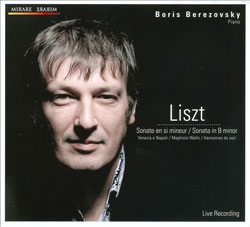
This CD, a collection of live recordings taken from performances at the Royal Festival Hall and the Festival de la Grange de Meslay, provides yet another example of Boris Berezovsky’s stunning virtuosity and musicality. A Liszt recital, the disc features the famous Sonata in B Minor, often considered Liszt’s greatest composition for solo piano. Other works include Harmonies du soir, Venezia e Napoli and the Mephisto Waltz No. 1. Berezovsky closes the disc with one encore, the Chopin Waltz, Op.42. Born in Moscow in 1969, Boris Berezovsky studied at the Moscow Conservatory with Eliso Virsaladze and privately with Alexander Satz. Following his London debut at the Wigmore Hall in 1988, The Times described him as “an artist of exceptional promise, a player of dazzling virtuosity and formidable power”; two years later that promise was fulfilled when he won the Gold Medal at the 1990 International Tchaikovsky Competition in Moscow.
Evgeny Kissin is a great pianist in the Russian tradition, with the sweeping style, generous tone and powerful but supple technique that marks an heir of Rachmaninov. But for him, music is a language and performance is about communicating meaning, and he can conjure a world of imagination â reflective and insightful â even as he dazzles with his astonishing mastery of the instrument. The music world is marking the bicentennial of the birth of Franz Liszt â composer, virtuoso, and all-around diabolical genius. Kissin’s on-going world tour is therefor devoted entirely to works by Franz Liszt, to mark the 200th anniversary and which means appearances at the most distinguished venues around the world, including La Scala, Concertgebouw, Barbican and Carnegie Hall.
Kissin Plays Liszt - New CD to be released on July 12, 2011
“Kissinâs musicality, poetic interpretations, and extraordinary virtuosity have placed him at the forefront of the worldâs new generation of pianists. So compelling is Kissinâs pianism, so fresh his response to even the most familiar phrases, that one hangs on every note.”
- The New York Times
“The splendid all-Liszt recital by Evgeny Kissin Sunday at Orchestra Hall pointed up a couple of interesting coincidences. When Liszt was Kissin’s age, he too was a virtuoso pianist famous the world over, even though he had already retired from active concertizing by the age of 40. Kissin, who â astonishingly enough, given his youthful appearance â will turn 40 in October, sounds as if he could go on delighting audiences forever. The evidence was plentiful on Sunday â the sovereign technical command that made everything seem effortless, the myriad stylistic insights, the avoidance of showmanship for its own empty sake. Sometimes Kissin made it all appear a bit too easy: You wanted a bit more of the sense of a performer grappling mano a mano with musical behemoths and finally vanquishing them, the way Vladimir Horowitz did. But this cavil wilted in the searing magnificence of the Russian pianist’s performances.”
- Chicago Tribune
“Despite the familiarity of his name, Liszt remains one of the great unknowns of 19th-century music, with swathes of his enormous output off-limits to performers and audiences. Evgeny Kissin’s all-Liszt programme may not have explored neglected territory, but the conviction generated by his combination of technical mastery with impeccable stylistic assurance offered a firm counterblast to those who view the composer as a superficial showman.”
- Guardian
“As I opened the programme to this all-Liszt recital by Evgeny Kissin, my eye was caught by a date: âBorn in 1971…â Could it really be true that the eternally youthful piano wizard was about to enter his 40th year, and join the ranks of the middle-aged? Seeing him walk on stage with that familiar bright-adolescent gait, bowing very politely left and right, it seemed frankly implausible. The IAs for the playing, it was just as blemish-free and uncannily perfect as the man. Kissin really can conjure miracles of textural refinement and glittery sound from a piano, so much so that you can feel they actually obscure the music. But – the Liszt fan might say – thatâs a false distinction. The whole point about Lisztâs wonderful piano tone-poems is that he makes pure sound expressive of a mood or scene. You donât need to look for something ‘behind’ it.”
- Telegraph
Transcriptions and paraphrases played an important part in shaping Liszt’s role as leading musical figure of his generation.
The first pianist to play the entire range of the keyboard repertory from Bach to Chopin, his historical curiosity and ambitions did not stop there. He transcribed both famous and less well known vocal and orchestral works of others in order to promote the music, and in order to challenge himself to enrich the field of piano techniques.
Schubert-Liszt: Ave Maria performed by Sandro Russo on Liszt’s 1862 Bechstein Piano:
Acclaimed young pianist Khatia Buniatishvili’s debut album for Sony Classical is devoted to Franz Liszt. Although she sees herself as belonging truly to the 21st century, like the Romantics, she looks for greatness in small things, for the universal in the individual. And in the music of Liszt, she seeks and finds her idea of musical completeness and pianistic perfection. The repertoire places a focus on the Faust theme: Liszt’s third Liebestraum is characterised by the thought from Goethe’s Faust: “O stay! Thou art so fair!” and the Mephisto Waltz was inspired by an episode in Nikolaus Lenau’s Faust poem. Moreover Khatia Buniatishvili reads Faust, Marguerite and Mephisto into the themes of the centerpiece of the recording, the Sonata in B Minor – technically one of the most demanding works ever written for piano.
Khatia Buniatisvili plays Liszt’s Nocturne No. 3 in A-flat Major (Liebestraum):
Piano sheet music, Lisztâs Nocturne No. 3 in A-flat Major (Liebestraum)::
The Complete Liszt Piano Music with Leslie Howard to be released in February 2011
In 1986, to mark the centenary of Franz Liszt’s death, Leslie Howard gave a series of ten Liszt recitals in Londonâs Wigmore Hall. By excluding Liszt’s arrangements (fantasies and transcriptions) of other composers’ works, and by selecting only the final versions of Liszt’s original works for solo piano, Howard was able to represent Liszt’s entire solo piano oeuvre in these mammoth recital programmes. The founder and Managing Director of Hyperion Records was present at these recitals, and invited Howard to record for the label. This resulted in the largest recording project ever undertaken by a recording artist (including pop artists) â that of the complete music for solo piano of Liszt. All Liszt’s versions of his piano music were included, including more than 300 premiere performances and recordings, and pieces unheard since Liszt’s lifetime, and also all Liszt’s arrangements of other composers’ works. Four discs were given to Liszt’s seventeen works for piano and orchestra, about half of which were premiere recordings made from unpublished manuscripts.
The series ran at first to 94 full-length CDs, and earned Howard a place in the Guinness Book Of Records. (The second volume of works for piano and orchestra included a bonus disc, not counted in the series numbering, which contained Ungarische Zigeunerweisen, a work for piano and orchestra by Liszt’s favourite female student Sophie Menter: Liszt’s exact involvement in the work is unknown, but he probably helped Menter in the composition of the solo part in the year before his death; the work was orchestrated seven years later by Menter’s friend Pyotr Ilyich Tchaikovsky, who conducted Menter in the premiere the following year).
The last disc of the Liszt series was recorded in December 1998, and released on 22 October 1999, Liszt’s birthday. Since completion of the project, two supplementary volumes have been released as further Liszt manuscripts have come to light. And a double-disc third supplementary volume has been recorded, and will be released in February 2011, bringing the total number of CDs in the series to 99.