On September 13, Russia’s Sofya Gulyak was awarded the 1st prize and the Princess Mary Gold Medal at the Sixteenth Leeds International Piano Competition – the first woman to achieve this distinction in the history of the competition.
She returned to Leeds on Saturday 14 November to perform Mozart Piano Concerto No 18 with the Royal Liverpool Philharmonic Orchestra. As well as the prestigious Leeds competition, Sofya Gulyak has won prizes at the William Kapell International piano competition (USA), Maj Lind Helsinki International piano competition and the Tivoli piano competition (Copenhagen). She studied at Kazan’s Special Music College for gifted children, Kazan State Conservatoire,
Italy’s Piano Academy and the Royal College of Music in London.
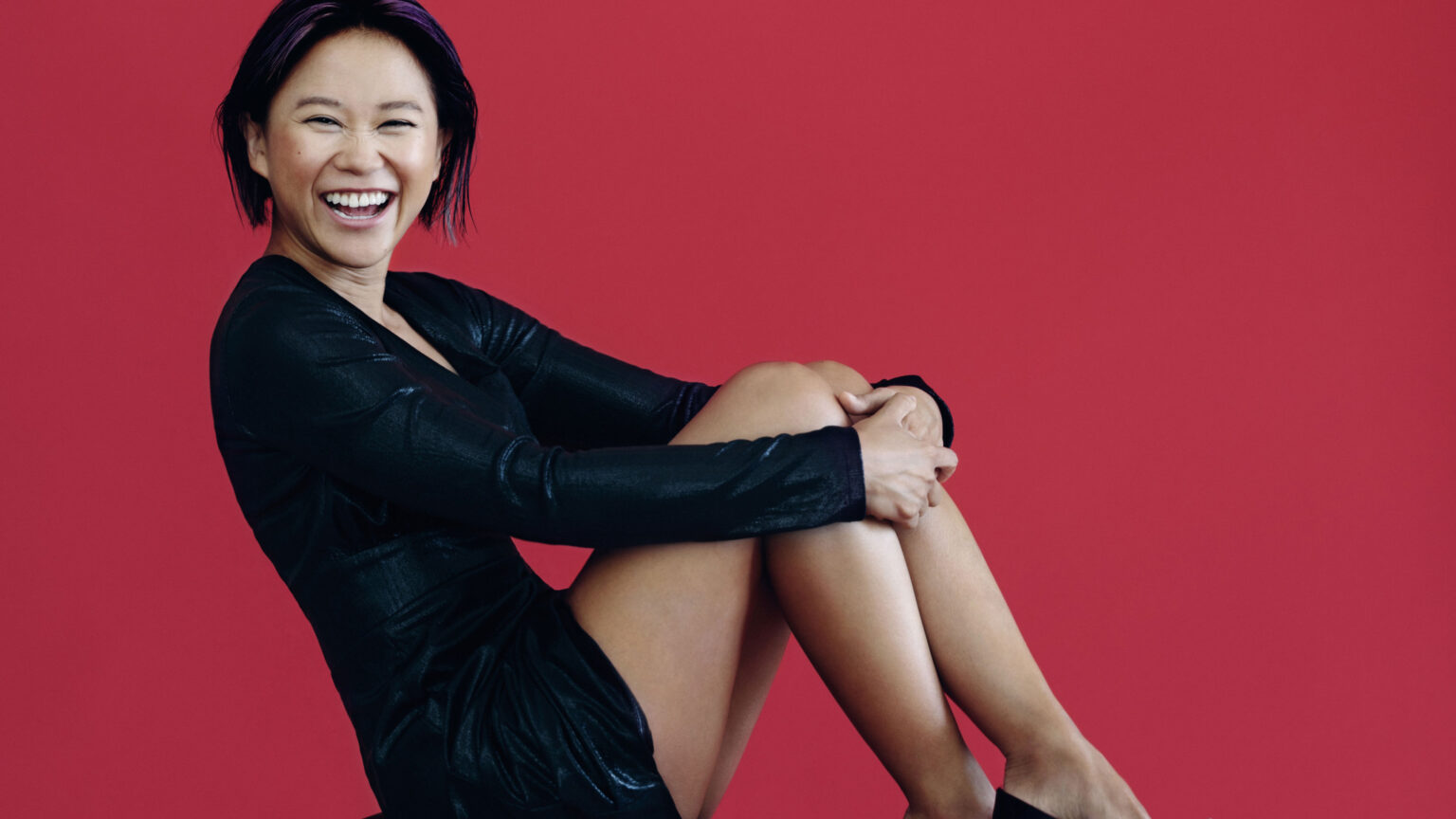
Chinese pianist, 22-year-old Yuja Wang thrilled international audiences with her opening performance alongside conductor Claudio Abbado at the Lucerne Festival on August 12.
“Last year, when Claudio Abbado saw me playing Franz Liszt´s Sonata on French television, he compared me to talented female pianist Martha Argerich and then sent me an invitation to cooperate. In March this year we had our first cooperation and this is the second one”, Wang explained.
Usually, musicians who work with Abbado are well-known masters such as Maurizio Pollini. However this year Abbado made an exception. Yuja is an exclusive recording artist for Deutsche Grammophon. For her debut recording, titled Sonatas & Etudes, released in the spring of 2009, she presented a program of sonatas including Chopin´s “Funeral March”, Liszt´s Sonata in B minor, Scriabin´s Sonata no. 2, and etudes by Ligeti.
Wang continues: “The piece was chosen by Abbado and I think it is quite suitable for an opening concert. It is a vivid and exciting work in which the soloist and orchestra play their own strong roles during the performance. It demonstrates the charm of the orchestra while revealing the delicate sound of the piano. When we were on the stage, there was a wonderful interaction between the orchestra and Abbado”.
Of the five piano concertos written by Prokofiev, the Piano Concerto No. 3 in C major, Op. 26, has garnered the greatest popularity and critical acclaim. The concerto radiates a crisp vitality that testifies to Prokofiev’s inventive prowess in punctuating lyrical passages with witty dissonances, while maintaining a balanced partnership between the soloist and orchestra. Unlike the examples of piano concertos set by many of Prokofiev’s Romantic forebears, the orchestra rises above subsidiary accompaniment to play a very active part in this work.
Prokofiev began work on the concerto as early as 1913 when he wrote a theme for variations which he then set aside. Although he revisited the sketches in 1916-17, he did not fully devote himself to the project until 1921 when he was spending the summer in Brittany. Prokofiev himself played the solo part at the premiere on 16 December 1921 with the Chicago Symphony Orchestra conducted by Frederick Stock. The work did not gain immediate popularity and had to wait until 1922 to be confirmed in the 20th century canon, after Serge Koussevitzky conducted a lavishly praised performance in Paris. The first Soviet performance was on 22 March 1925, by Samuil Feinberg, with the Orchestra of the Theatre of the Revolution under Konstantin Saradzhev.
Prokofiev himself made the first recording of the Piano Concerto No. 3 in 1932 with the London Symphony Orchestra conducted by Piero Coppola. The recording was made at Abbey Road Studios in London and is the only recording that exists of Prokofiev performing one of his own piano concertos.
1st movement:
Children exposed to a multi-year programme of music tuition involving training in increasingly complex rhythmic, tonal, and practical skills display superior cognitive performance in reading skills compared with their non-musically trained peers, according to a study published recently in the journal Psychology of Music, published by SAGE. http://pom.sagepub.com/cgi/rapidpdf/0305735608097248v1
According to authors Joseph M Piro and Camilo Ortiz from Long Island University, USA, data from this study will help to clarify the role of music study on cognition and shed light on the question of the potential of music to enhance school performance in language and literacy.
Studying children the two US elementary schools, one of which routinely trained children in music and one that did not, Piro and Ortiz aimed to investigate the hypothesis that children who have received keyboard instruction as part of a music curriculum increasing in difficulty over successive years would demonstrate significantly better performance on measures of vocabulary and verbal sequencing than students who did not receive keyboard instruction.
Several studies have reported positive associations between music education and increased abilities in non-musical (eg, linguistic, mathematical, and spatial) domains in children. The authors say there are similarities in the way that individuals interpret music and language and âbecause neural response to music is a widely distributed system within the brainâŚ. it would not be unreasonable to expect that some processing networks for music and language behaviors, namely reading, located in both hemispheres of the brain would overlap.â
Abstract:
A number of studies have reported positive associations between music experience and increased abilities in non-musical (e.g., linguistic, mathematical, and spatial) domains in children. These transfer effects continue to be probed using a variety of experimental designs. The major aim of this quasi-experimental study was to examine the effects of a scaffolded music instruction program on the vocabulary and verbal sequencing skills of two cohorts of second-grade students. One group (n = 46) studied piano formally for a period of three consecutive years as part of a comprehensive instructional intervention program. The second group (n = 57) had no exposure to music lessons, either in school programs or private study. Both groups were assessed on two subtests from the Structure of Intellect (SOI) measure. Results revealed that the experimental group had significantly better vocabulary and verbal sequencing scores at post-test than did the control group. Data from this study will help to clarify the role of music study on cognition and shed light on the question of the potential of music to enhance school performance in language and literacy.
Chandos has been attentive in promoting the orchestral works of Alexandre Tansman, who due to the vagaries of fashion has to a great extent been ignored. They now embark on the piano music and a deeply personal project for soloist Margaret Fingerhut.
Listen to samples from the new album “Tansman: Piano Works” at Amazon.com
“My curiosity about the piano music of Tansman began over 20 years ago when I encountered the delightfully languid Berceuse he wrote for the album of Hommages to Roussel, and which I recorded for Chandos. The fact that he was born in Lodz, Poland, where my great-grandparents also came from, spurred me on to find out more about him, and since then I have been assiduously collecting his piano works – quite a task as it turns out that in the course of his long composing career Tansman was nothing if not prolific!” says Margaret Fingerhut.
Well known for her recordings with British music, Margaret Fingerhut has performed in many different countries and has become well-known for her innovative recital programmes which combine popular and unusual repertoire. As a concerto soloist she has played with all the UKâs major orchestras, working with eminent conductors such as Vernon Handley, Rudolf Barshai, Leonard Slatkin, Paul Daniel and Sir Edward Downes, and performing in venues such as the Royal Festival Hall, Royal Albert Hall and the Barbican. Margaretâs extensive discography for Chandos has received worldwide critical acclaim and is regularly played on international radio networks. Her discs include works by Bax, Berkeley, Bloch, Dukas, Falla, Grieg, Howells, Leighton, Novak, Stanford and Suk. Many have been selected as the Gramophoneâs Criticsâ Choice, and two of her Bax recordings were nominated for Gramophone awards. She is often heard on BBC Radio 3 and Classic FM, and she has also appeared on film and television.
Also listen to Margaret Fingerhut playing Milly Balakirev´s Toccata in c sharp minor:
The International Mozarteum Foundation in Salzburg has announced it has discovered two previously unknown compositions written by Wolfgang Amadeus Mozart.
“The Department of Research at the International Mozarteum Foundation Salzburg has identified two works, which have long been in the possession of the Foundation, as compositions of the young Wolfgang Amadeus Mozart,” the foundation said in a recent statement, without giving any more details.
The two pieces for piano are to presented to the press on August 2. They will be performed by clavichordist Florian Birsak on Mozart’s own fortepiano at the family’s old Salzburg residence.
This latest score is not the only one to have resurfaced in recent years however. Last September, a library in Nantes, in western France, unveiled a hitherto unknown music score by Mozart that had lain in its archive undiscovered for over a century. It was authenticated by the Mozarteum.
In 2006, a year filled with celebrations for the 250th anniversary of Austria’s favourite son, another piano score extremely likely to be the work of young Wolfgang Amadeus was discovered in Salzburg.
In May of last year, experts also identified three mystery musical scores discovered at Poland’s historic Jasna Gora Roman Catholic monastery in southern Poland, as possible Mozart creations.
Added 20 August 2009:
From NTDTV on August 03, 2009:
Listen to one of the two new pieces performed on harpsichord by Florian Birsak in Salzburg, August 2009:
“Mitsuko Uchido is one of perhaps just a handful of classical pianists whose work can justifiably be mentioned alongside the great players of the past – Rachmaninov, Schnabel, Cortot, Michelangeli.” (ABC Radio National, Australia)
This season, Uchida is artist-in-residence with the Berlin Philharmonic Orchestra. Her residency includes performances of Schumannâs Piano Concerto with Sir Simon Rattle, and a series of four chamber music concerts. She is also artist-in-residence at the Konzerthaus Vienna and at the Salzburg Mozartwoche.
Here you can enjoy an excerpt from the third movement of the mentioned Schumann a minor Piano Concerto performance as of February 13, 2009:
Excerpt third movement:
Interview with Uchida on the Schumann concerto:
Born in Atami, a seaside town close to Tokyo, Japan, Uchida moved to Vienna, Austria when she was twelve years old with her diplomat parents after her father was named the Japanese ambassador to Austria. She enrolled at the Vienna Academy of Music to study with Richard Hauser, and later Wilhelm Kempff and Stefan Askenase, and remained in Vienna to study after her father was transferred back to Japan after five years. She gave her first Viennese recital at the age of 14 at the Vienna Musikverein.
In 1969 she won the first prize in the Beethoven Competition in Vienna and in 1970 the second prize in the International Frederick Chopin Piano Competition. Then, in 1975, she won second prize in the Leeds Piano Competition. From 2002 to 2007 she served as artist-in-residence for the Cleveland Orchestra, where she led performances of all of Mozart’s solo piano concertos.
She is an acclaimed interpreter of the works of Mozart, Beethoven, Schubert, Chopin, Debussy and Schoenberg. She has recorded all of Mozart’s piano sonatas (a project that won the Gramophone Award), and concerti, the latter with the English Chamber Orchestra, conducted by Jeffrey Tate. She is further noted for her recordings of Beethoven’s complete piano concerti with Kurt Sanderling conducting, Beethoven’s late piano sonatas, and a Schubert piano cycle. Her recording of the Debussy Ătudes won another Gramophone Award, and so did her recording of the Schoenberg piano concerto. In April 2008, BBC Music Magazine presented her its Instrumentalist of the Year and Disc of the Year award. She is distinguished as an interpreter of the works of the Second Viennese School (read the interview from The Guardian below).
She is an Artistic Director of the Marlboro Music School and Festival, along with fellow pianist Richard Goode. She is also a trustee of the Borletti-Buitoni Trust, an organization established to help young artists develop and sustain international careers. Uchida is a recipient of the 1986 Suntory Music Award.
Jean-Efflam Bavouzet took the Instrumental Award at this year’s BBC Music Awards for the third (out of four) volume of his complete Debussy piano music series on the Chandos label.
What makes this disc special is not only Bavouzet’s exceptional playing, but the intelligent programming. From what could easily have sounded a “bits and pieces” micellany, Bavouzet has created a wide-ranging programme which both encapsulates Debussy’s entire work, and at the same time has a sense of a coherent progression.
âWe have a lot to learn from Debussy,â writes Bavouzet. âThrough the sophisticated sounds he seeks to create and the simplicity of his textures by which he builds, in just a few phrases and harmonies, a whole world of poetry, but also through writing which always reveals a highly contrapuntal way of thinking, Debussy compels us to listen to his music in a very private, intense and nearly religious manner.
Starting May 22, all performances will be streamed live eleven hours per day and then archived for âon-demandâ viewing. http://www.cliburn.tv/
The Van Cliburn International Piano Competition was first held in 1962 in Fort Worth, Texas. It was created by Fort Worth area teachers in honor of Van Cliburn, who had won the first International Tchaikovsky Competition four years prior with Tchaikovsky’s First Piano Concerto and Rachmaninoff’s Piano Concerto No. 3. Van Cliburn was only twenty-three when he won in Moscow on April 14, 1958, at the height of the Cold War.
Upon his return to the United States, the young pianist received a heroâs welcome in New York City with a ticker-tape parade. This was the first and only time the city gave such an honor to a classical musician.
On that historic day, Van Cliburn became both cultural hero and unofficial diplomat. He went on to perform before every U.S. president from 1958 until today; the most famous of these concerts occurred in 1987 when he played for Ronald Reagan and Mikhail Gorbachev in the White House. This occassion is now remembered as âthe day the Cold War was lost.â
Historic video coverage featuring Van Cliburn:
The 2009 Competition
Twenty-nine pianists will compete in the Preliminary Round; twelve will compete in the Semifinal Round; and six will vie for top honors in the Final Round. All six finalists will receive a prize package offering three years of managed concert tours at over $1,000,000 total value.
Cliburn winners perform in hundreds of venues across the United States and abroad.
The Royal Northern College of Music (RNCM), BBC Philharmonic and Manchester Camerata have joined forces to mark the 200th anniversary of the death of Joseph Haydn with a series of concerts and events. To promote the events a dedicated website has been created:
The RNCM Keyboard Festival (8 – 10 May) will feature all of Haydnâs keyboard sonatas. Graham Scott, Head of School of Keyboard Studies, and Artistic Director of the Keyboard Festival, commented, âComposed over the course of three decades the sonatas undergo an extraordinary passage of development from quite simple drawing room pieces to works of extreme harmonic, dramatic and intellectual inventiveness.
Joseph Haydn's two-manual harpsichord, made by Burkat Shudi and John Broadwood, London 1775.
To complement these sonatas some chamber works will also be performed during the festival, most notably two of his piano concertos in their arrangements for piano and string quartet. Celebrated Argentinian pianist Nelson Goerner concludes the festival with a recital that includes Haydn’s exquisite F minor Variations.â
The Guardian said âThe most perfect piano playing conceivable…â and The Washington Post “a virtuoso who begins where others leave off.”
English pianist Stephen Hough has enjoyed a phenomenal recording career with over forty recordings, many of which have won Gramophone and Diapason awards and Time Magazineâs Classical CD of the Year. He is a champion of forgotten masterpieces and newly commissioned works and is an avid writer, poet and composer.
In September 2008, Stephen Hough was awarded a Gold Disc for his Saint SaĂŤns´s concerto set as the most popular classical recording of the past 30 years. Quite uniquely, Hough is open about weaknesses, about moments when he’s deeply questioned his career choice as a touring musician. Fighting his nerves and overcoming moments when he says he fails to reach his own high standards. The “writings” section of his website is highly recommendable.