Hanon - Piano Music
Charles Louis Hanon
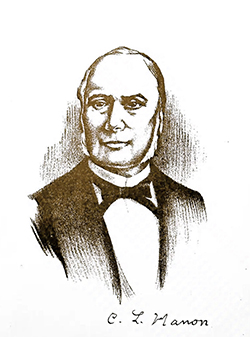
Born into a devout Catholic family in Renescure, France, Charles Louis Hanon (1819-1900) studied music with a local organist. He settled in Boulogne and worked for a while as a choirmaster and organist. He taught singing and piano privately and eventually started to publish his own compositions. Hanon led a devotedly religious and charitable life but at the same time showed a marked aptitude for business. His works all have a didactic or sacred purpose.
It is for Le piano virtuose (The Virtuoso Pianist), a set of 60 technical exercises, that he is chiefly remembered. Published in Boulogne in 1873 this work has been frequently reprinted and is still widely used. The exercises are arranged in three parts – preparatory exercises, further exercises and virtuoso exercises – and are meant to be played consecutively in the sections they are placed in, to help increase endurance as well as technical ability. After all three parts are mastered, Hanon recommends all exercises be played through daily to retain technique.
Hanon Piano Sheet Music
for digital devices or to download & print
Total pieces by Hanon: 3
ID:54| Title | Key | Year | Level | |
|---|---|---|---|---|
All pieces: | ||||
| The Virtuoso Pianist Part 1 (1-20) | N/A | 1873 | n/a | |
| The Virtuoso Pianist Part 2 (21-43) | N/A | 1873 | n/a | |
| The Virtuoso Pianist Part 3 (44-60) | N/A | 1873 | n/a | |
Forum posts about Charles Louis Hanon
Foundations of repertoire and technique by liszt-and-the-galops
Between Czerny, Hanon, and Bach, which do you think provides the best foundation for technique? Are there other composers who are equally as...
Building a practice regimen by m1kes_
So, I'm currently studying at a conservatoire and I would like to apply to college at the end of the next academic course. I have been...
Hanon for beginner by martinn
What is a sensible way to practice Hanon 1-30 ? I have decided to use them mainly as a warm-up, a few a day. At least I feel my finger contr...
pro-hanon vs anti-hanon by ptyrrell
I'm am sure this topic has been discussed before but I wanted to throw it out there of who is pro-hanon and who is anti-hanon and why? ...
Hanon and Other Excerises are VERY IMPORTANT by lostinidlewonder
I felt compelled to post this for Beginners who might be influenced by some more experienced pianists saying piano exercises are useless. I ...