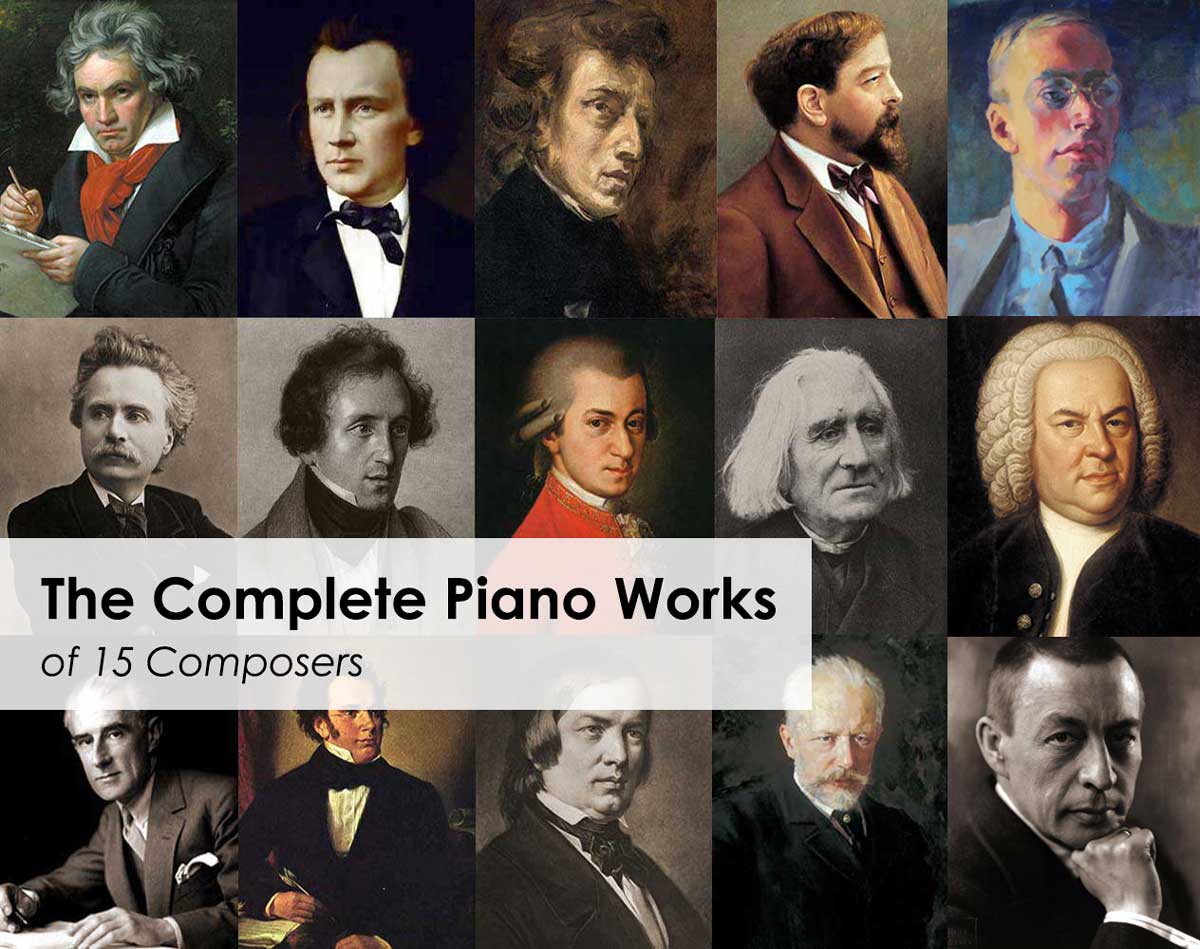
The Complete Piano Works of 15 Composers
Piano Street’s digital sheet music library is constantly growing. With the additions made during the past months, we now offer the complete solo piano works by fifteen of the most famous Classical, Romantic and Impressionist composers in the web’s most pianist friendly user interface. Last year, we celebrated Piano Street’s 20th anniversary with a new web design and new improved […]
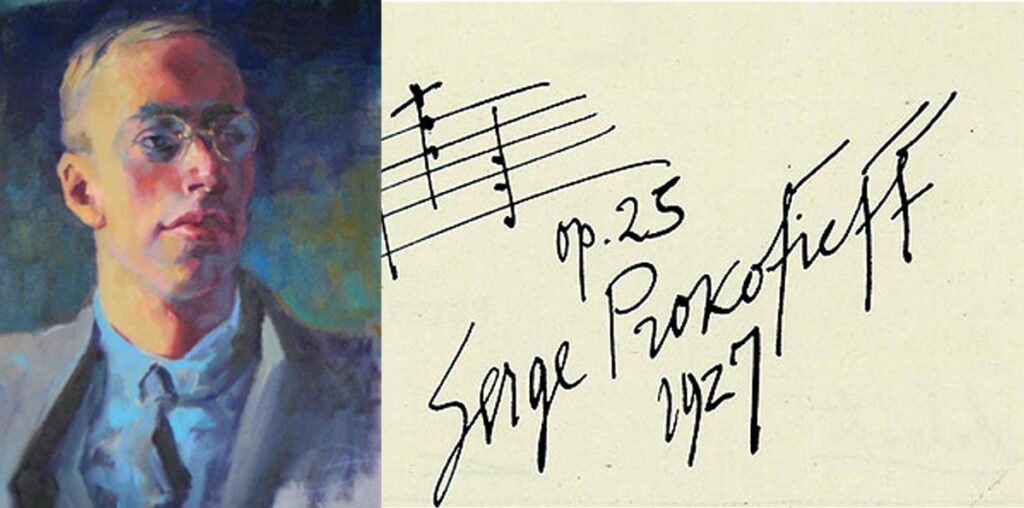
Enfant Terrible or Childishly Innocent? – Prokofiev’s Complete Piano Works Now on Piano Street
In our ongoing quest to provide you with a complete library of classical piano sheet music, the works of Sergey Prokofiev have been our most recent focus. As one of the most distinctive and original musical voices from the first half of the 20th century, Prokofiev has an obvious spot on the list of top piano composers. Welcome to the […]

Piano Street’s Top Picks of 2023
We wish you a Happy New Year with a list of recommended reading from Piano Street. These are the most read, discussed or shared articles of 2023. /The Piano Street Team The top list is also published on our Facebook page. Feel free to share the list with your piano playing friends! (Top picks selections from previous years: 2022 2021 […]
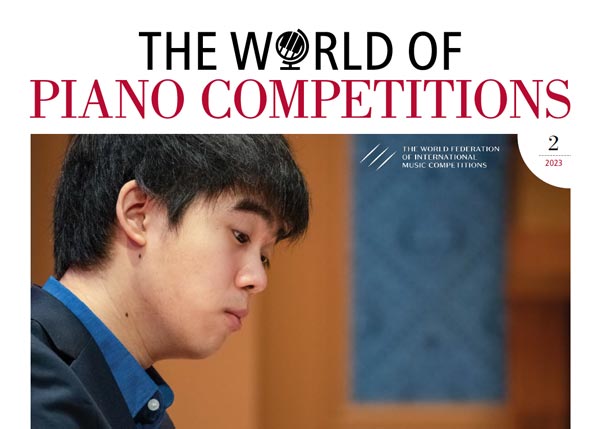
The World of Piano Competitions – issue 2 2023
The World of Piano Competitions is a magazine initiated by PIANIST Magazine (Netherlands and Germany) and its Editor-in-Chief Eric Schoones. Here we get a rich insight into the world of international piano competitions through the eyes of its producers and participants. “We are happy and proud to present to you our 10th edition of The World of Piano Competitions. And […]
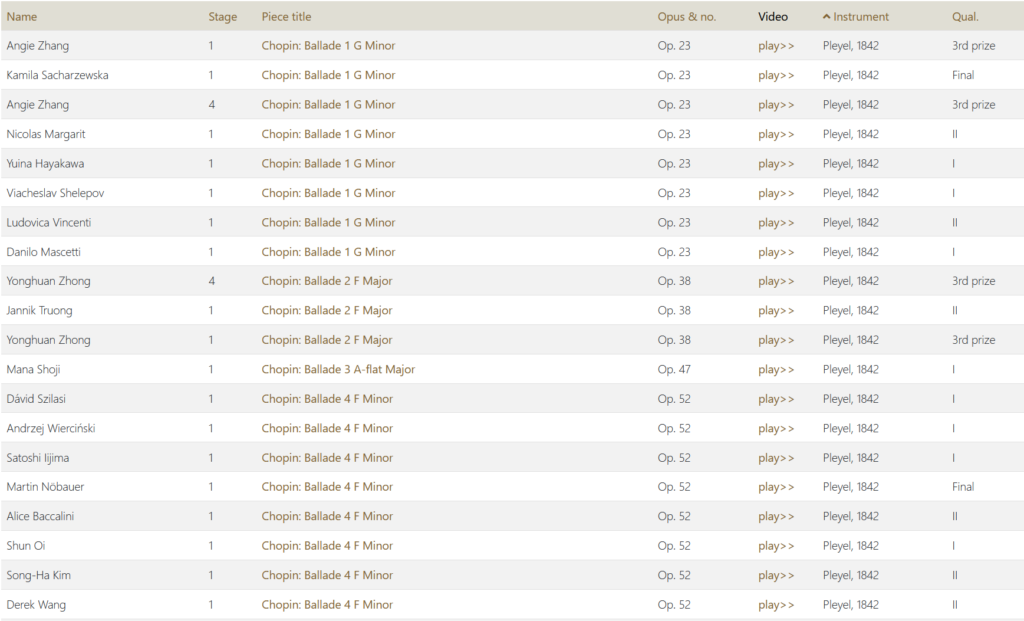
Watch the Chopin Competition on Period Instruments with us!
Piano Street presents a new version of its popular tool (first presented during the 2010 Competition) for navigating the hundreds of great performances taking place during the recent Chopin Competition on Period Instruments. Use our list of pieces and pianists to find and compare your personal favorites among this year’s 35 contestants. Following the success of the first International Chopin […]
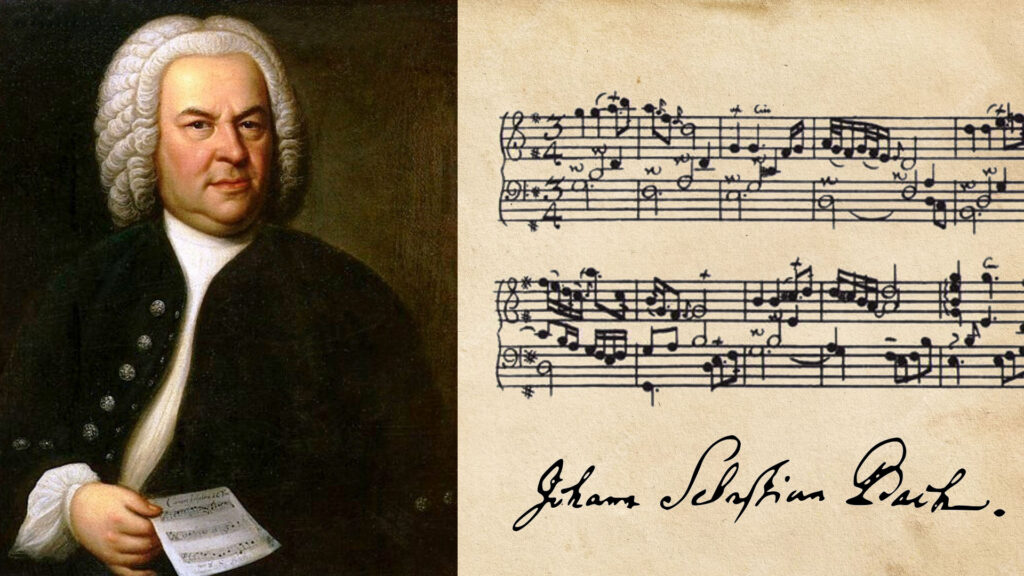
A Daily Dose of Bach? – Access his Complete Scores on Piano Street
Johann Sebastian Bach’s keyboard music is some of the most essential repertoire for pianists, although he lived before the era of the modern piano. And you don’t need to look any further than Piano Street: our library of sheet music by Bach – 250 pieces waiting to be explored – is now complete. Many musicians and composers have made a […]
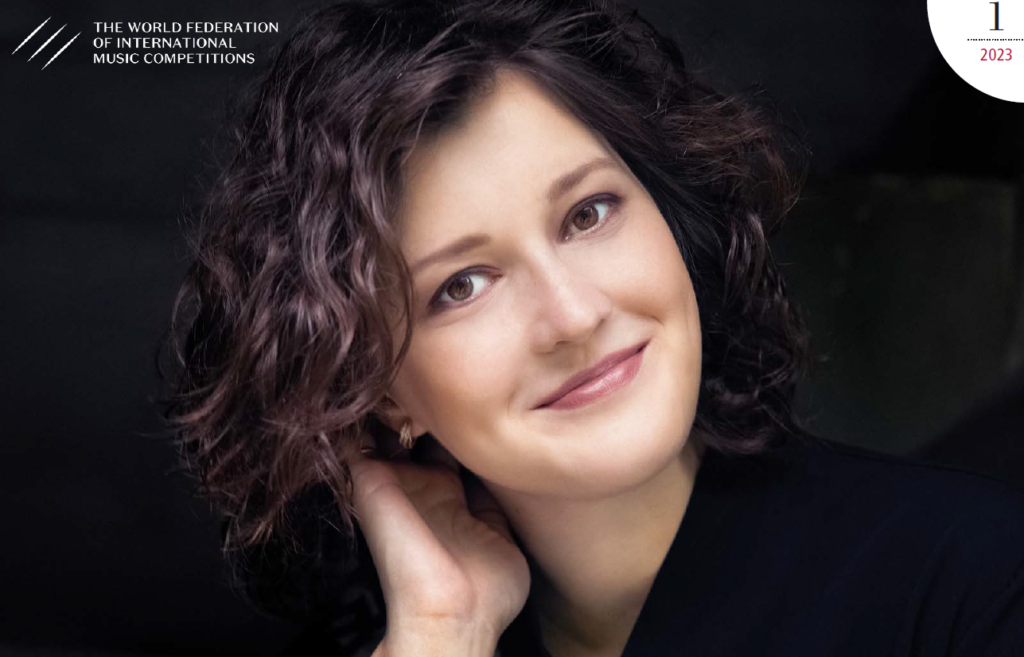
The World of Piano Competitions – issue 1 2023
The World of Piano Competitions is a magazine initiated by PIANIST Magazine (Netherlands and Germany) and its Editor-in-Chief Eric Schoones. Here we get a rich insight into the world of international piano competitions through the eyes of its producers and participants. Click cover to download: Contributing Editors: Gustav Alink (Alink-Argerich Foundation), Patrick Jovell (Piano Street), Florian Riem (WFIMC). Free download! […]
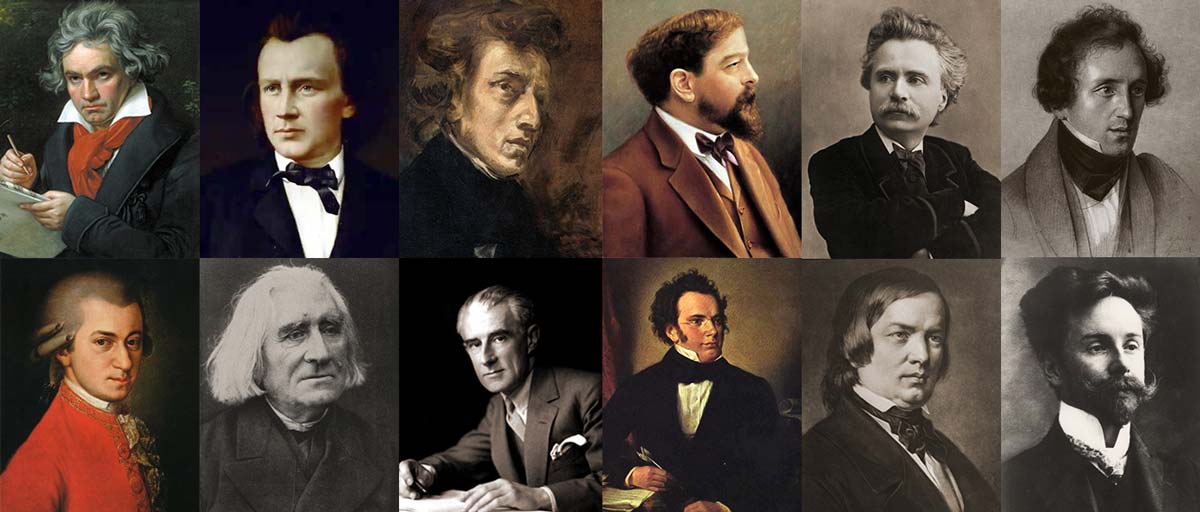
The Complete Piano Works of 12 Composers
Piano Street’s digital sheet music library is constantly growing. With the additions made during the past months, we now offer the complete solo piano works by twelve of the most famous Classical, Romantic and Impressionist composers in the web’s most pianist friendly user interface. UPDATE OCTOBER 2023: Following the poll below, we have now finshed the work to publish the […]

Take Your Seat: Argerich and Barenboim in Berlin
They are two world stars from Argentina and have known each other since childhood: Martha Argerich and Daniel Barenboim. This weekend, in three unique sold-out concerts, they perform Schumann’s Piano Concerto together with the Berliner Philharmoniker. We are immensely happy about our continuous collaboration with Berliner Philharmoniker’s Digital Concert Hall which enables us to invite our members to the live […]
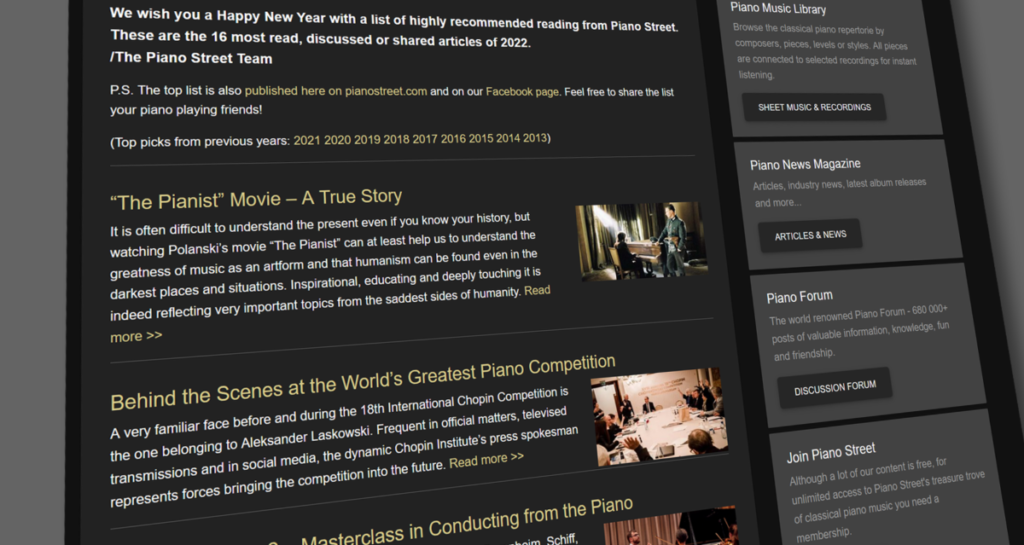
Piano Street’s Top Picks of 2022
We wish you a Happy New Year with a list of highly recommended reading from Piano Street. These are the 16 most read, discussed or shared articles of 2022. /The Piano Street Team P.S. The top list is also published here on pianostreet.com and on our Facebook page. Feel free to share the list your piano playing friends! (Top picks […]
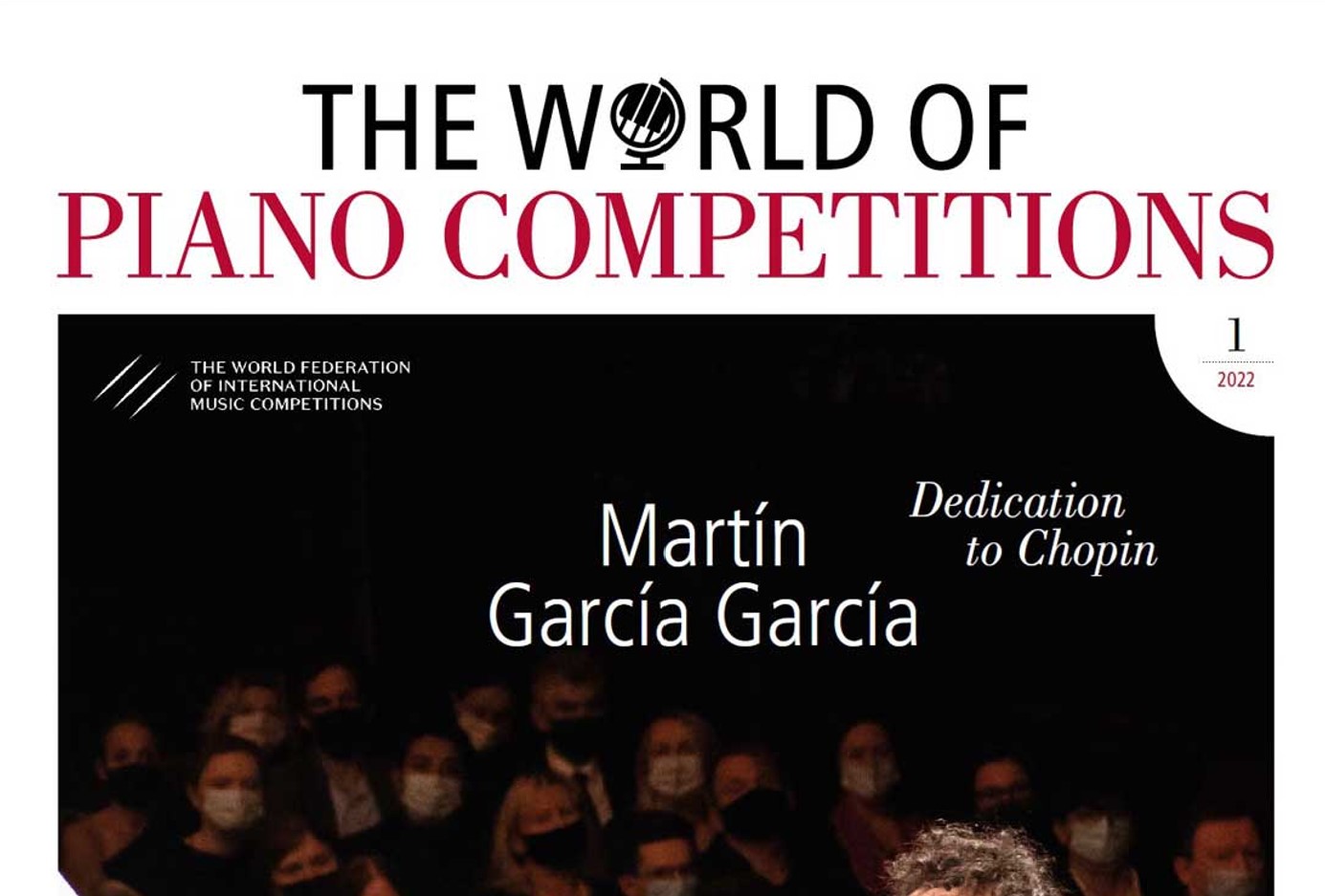
The World of Piano Competitions – issue 1 2022
As a collaborating partner Piano Street is proud to present the seventh issue of The World of Piano Competitions, a magazine initiated by PIANIST Magazine (Netherlands and Germany) and its Editor-in-Chief Eric Schoones. Here we get a rich insight into the world of international piano competitions through the eyes of its producers and participants. Click cover to download: Contributing Editors: […]
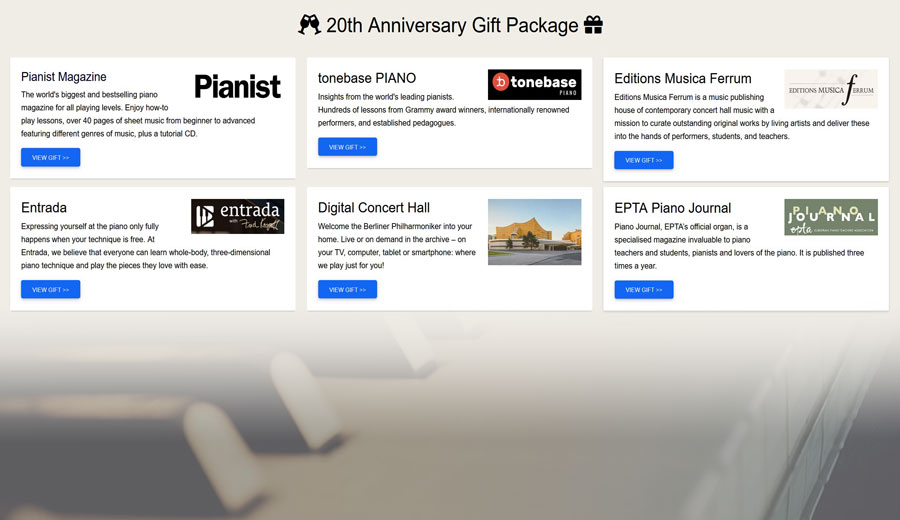
Piano Street 20 Years – Anniversary Gift Package
To celebrate our 20 years online, we have teamed up with a few carefully selected partners that share our goal of inspiring you to play and listen to great piano music. Today, on the World Piano Day, 29th March, each of the six partners have a generous gift waiting for you inside our membership area! Log in to your Piano […]