Beethoven - Piano Music
Ludwig van Beethoven
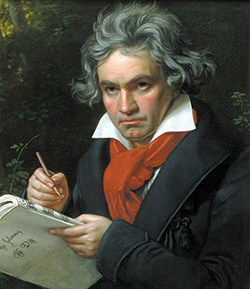
Beethoven pushed the boundaries for what was possible to express on the piano. Compared to polished classicists like Mozart and Haydn, he wears his heart on his sleeve - Beethoven is rough, direct, passionate, and bold. He had more than his fair share of inner turmoil, ill health, and personal troubles. Still, he remained an optimist in the deepest sense of the word - his music can be an emotional roller coaster, but more often than not, it leaves you feeling uplifted.
Top Pieces:
Für Elise
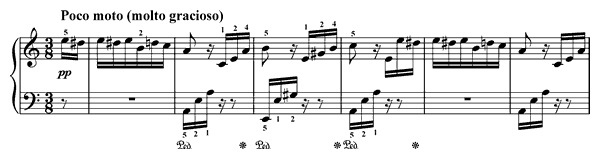
Sonata 8 (Pathéthique) in C Minor, Op. 13
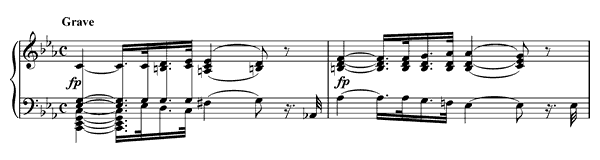
Sonata 14 (Moonlight) in C-sharp Minor, Op. 27 No. 2

Sonata 23 (Appassionata) in F Minor, Op. 57
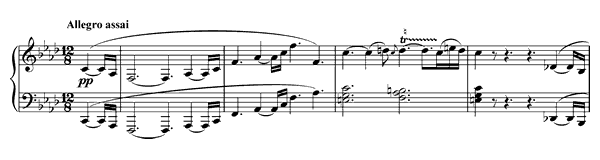
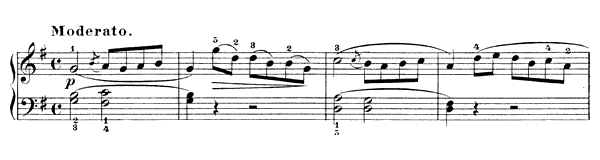
Sonatina 6 in G Major, Anh. 5/1
Biography
Ludwig van Beethoven’s (1770-1827) mother died when he was 16; because of his father's alcoholism he became responsible for his two younger brothers. To stop the family’s money from being spent on drinking, Beethoven even went to his father’s employer to demand half of the salary. At age 22, Beethoven went from his native town Bonn to Vienna to study with Haydn. He established a reputation as a virtuoso improviser at the keyboard and managed to get support from the aristocracy in spite of his uncouth manners; the Archduke Rudolph later decreed that usual court etiquette did not apply to Beethoven.
Beethoven’s first opus, three piano trios, appeared in 1795 and had immediate success. Not long after this Beethoven began to lose his hearing, which not only made it hard for him to perceive music and to perform, but also intensified his antisocial tendencies. He even contemplated suicide but eventually made a resolution to continue living for his art. He then spent the following decade writing some of the most admired works in all music history, many of them expressing struggle and heroism. The first of these, his 3rd symphony Eroica, was originally dedicated to Napoleon – he erased the dedication when Napoleon proclaimed himself emperor. Beethoven became the most respected composer of his time, but his personal difficulties continued, including a series of failed romances. The realisation that he would never marry probably contributed to a period of depression and low productivity from about 1812. That year he wrote a famous love letter to a certain "Immortal Beloved", the identity of whom remains unknown.
When his brother suddenly died, Beethoven became involved in a long struggle for the custody of his nephew Karl. However, towards the end of the 1810s Beethoven’s creative imagination triumphed once again over his troubles. The works of his late period are written in a unique, highly personal musical language where variation form and contrapuntal writing features prominently and large-scale forms are handled with complete freedom. In spite of his deafness, Beethoven managed to perform on a number of occasions; having conducted the premiere of the Ninth Symphony, he began to weep when he turned around and saw the tumultuous applause of the audience. Beethoven died on 26 March 1827, in the midst of a fierce thunderstorm – legend has it that the dying man shook his fists in defiance of the heavens.
Quotes by Beethoven
“Music is a higher revelation than all wisdom and philosophy.”
“Do not merely practice your art, but force your way into its secrets; it deserves that, for only art and science can exalt man to divinity.”
“O you men who think or say that I am malevolent, stubborn or misanthropic, how greatly do you wrong me, you do not know the secret causes of my seeming. I sometimes ran counter to it yielding to my inclination for society, but what a humiliation when one stood beside me and heard a flute in the distance and I heard nothing, or someone heard the shepherd singing and again I heard nothing, such incidents brought me to the verge of despair, but little more and I would have put an end to my life - only art it was that withheld me, ah it seemed impossible to leave the world until I had produced all that I felt called upon me to produce, and so I endured this wretched existence.”
“The true artist has no pride. He sees unfortunately that art has no limits; he has a vague awareness of how far he is from reaching his goal; and while others may perhaps admire him, he laments the fact that he has not yet reached the point whither his better genius only lights the way for him like a distant sun.”
“What you are, you are by accident of birth; what I am, I am by myself. There are and will be a thousand princes; there is only one Beethoven.” (Letter to Prince Karl Lichnowsky)
“I shall seize Fate by the throat; it shall certainly not bend and crush me completely”
Quotes about Beethoven
"When I left out something in a passage, a note or a skip, which in many cases he wished to have specially emphasized, or struck a wrong key, he seldom said anything; yet when I was at fault with regard to the expression, the crescendo or matters of that kind, or in the character of the piece, he would grow angry. Mistakes of the other kind, he said were due to chance; but these last resulted from want of knowledge, feeling or attention. He himself often made mistakes of the first kind, even playing in public." (Ferdinand Ries)
"His improvisation was most brilliant and striking. In whatever company he might chance to be, he knew how to produce such an effect upon every hearer that frequently not an eye remained dry, while many would break out into large sobs; for there was something wonderful in his expression in addition to the beauty and originality of his ideas and his spirited style of rendering them. After ending an improvisation of this kind he would burst into loud laughter and banter his hearers on the emotion he had caused in them. You are fools! he would say." (Carl Czerny)
Beethoven Piano Sheet Music
for digital devices or to download & print
Total pieces by Beethoven: 163
ID:3Forum posts about Ludwig van Beethoven
Practice: One piece from each period? by dizzyfingers
How many of you adopt the practice of working on (at least) one piece from each period? Baroque - Bach, Scarlatti, Rameau, etc Classical - ...
Robert Schumann by geister
Hello guys. This is my first topic here. Going to dig around a bit in older topics, I couldn't help but notice that Schumann is not only...
What does this Beethoven sheet music mean? by applelover
Newbie question here. I circled a few places in green. See how there are notes that are kind of connected, but there are some notes on the l...
Does anyone else notice that early-era pianists played much faster? by cuberdrift
Why is it that old recordings usually have classical music played much faster than how musicians play today? I think over time as the audie...
an attempt to define and quantify the standard piano repertoire by de.schreiber.de
Using the Carnegie Hall website and its dataset of over 35,000 works performed in recitals at Carnegie Hall from 1891 to 2022, I've crea...
Yuja Wang: Chicago performance by jimf12
Yesterday I saw Yuja Wang in Chicago give what I would say is the most dynamic classical performance I have ever seen. I was just flo...
What to read to understand the Classical Style? by jlmap
Hi! I'm an amateur pianist. I've studied some sonatas by Beethoven and Mozart, and I would like to learn more about this period. I&#...
I'm stressed and need some advice (Tell the whole story in the post) by pierusskiy
Hi! I�m a 18 turn 19 years old piano student outside the music college, conservatory and any music school. I have a private teacher, but I...
Which English Translation of Beethoven's Letters is the best? by theholygideons
I am planning on reading the letters of Beethoven. I am looking for a translation that captures Beethoven's unique writing style as muc...
Composers born or who lived in Viena by chechig
Hi everyone. Many great composers through history were born or lived in Viena, like Mozart, Beethoven, Brahms, Schubert, Bortkiewicz, Chopin...
Re: Schubert & Beethoven performers by kempff1234
it really depends on what oeuvre of these composers you are looking so: (my favs) Beethoven: Piano concerti- Wilhelm Kempff, Arthur Rubins...
Pedalling in Beethoven by steve jones
This is going to be one of those REALLY broad questions, so please hang in there! Id like to ask how typically the pedal is used in Beetho...
Re: Do you consider Alfred Brendel the best Beethoven interpreter? by Bernhard
Not really. I like Arrau, Backaus, Serkin, Kempf, Ivan Moracec and Andras Schiff far better. However I do like his books and essays on m...
How to learn to feel angry for playing Beethoven? by xvimbi
Someone I know has an interesting "problem". She has been told repeatedly that her Beethoven sonatas sound flat and that she needs...
Re: Beethoven or Mozart? by bachopoven
Hard to choose. I always go through ever-changing periods of Beethoven, Mozart and Chopin, and yes, Bach. I can't choose between these four....