“The Sound Always Comes First” — Andrea Bonatta on Teaching Liszt
Why tone matters more than speed, why reading Goethe matters as much as practising octaves, and how a single insight can transform a performance. Italian pianist and scholar Andrea Bonatta has spent decades exploring the contradictions of Franz Liszt, from performer to man of faith, virtuoso to poet. Here, in conversation with Piano Street at Liszt Utrecht 2026, he shares his vision.
To understand Franz Liszt, we must look beyond the piano. His legacy is kaleidoscopic, placing immense demands on its interpreters. To grasp the man behind the myth is a formidable task: the child prodigy and flamboyant showman was also a devoted tutor, religious philosopher and visionary futurist. Doing justice to all of this requires immersion in the historical and cultural landscape of Liszt’s own time.
In this interview, renowned Liszt pianist and scholar Andrea Bonatta, a central figure in the Liszt Utrecht international masterclass programme, shows how that wider understanding ultimately leads us back to the piano.
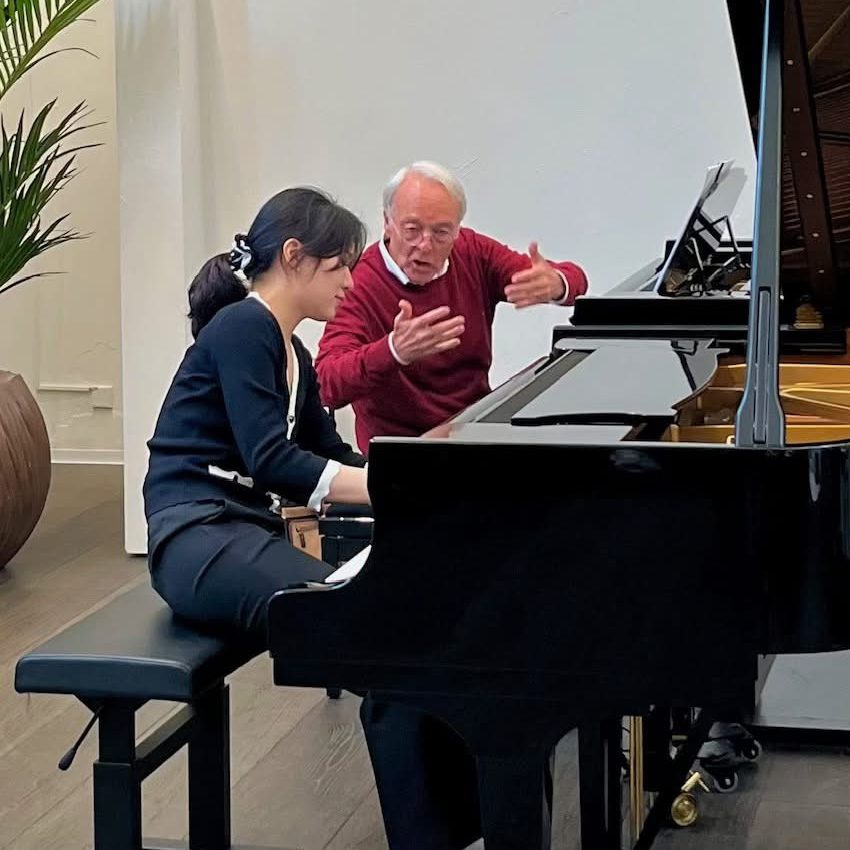
South Korean pianist Sunah Kim receiving vivid instruction from Professor Bonatta
Piano Street: Dear Mr. Bonatta, when you step onto the Liszt Utrecht stage for a masterclass, what’s the first thing you want your students to feel – the music, the technique, or something deeper?
Andrea Bonatta: In ancient Greek, ‘techne’ means art, and therefore imagination, creativity, and profound expression of one’s inner world. Young pianists often focus too much on the mechanical aspects of Liszt’s scores, perhaps because they think they need to impress with their performance. This is a serious mistake, which Liszt himself deplored. His famous phrase “Machen Sie kein Maccaroni-Spiel” remains highly relevant.
PS: Liszt’s music can be breathtakingly virtuosic. How do you help young pianists navigate the pyrotechnics without losing the poetry?
AB: Especially in Liszt, virtuosity is often misunderstood as a mechanical element. This is terrible and irreparably alters the essence of his music. We must try to understand the meaning, the vision, the content behind a certain passage. The image of sound is fundamental. A passage of octaves can be merely loud and unpleasant; it can even cause a sense of irritation. But it can also enter the soul like a wave of the sea and provoke a deep emotional involvement. In such cases, it is essential to demonstrate on the piano what sound to seek. The poetic content of the melodic lines also depends on the sound, as well as diction and phrasing. But for me, the sound always comes first.
PS: You’ve taught in cities from New York to Tokyo. Have you noticed that students approach Liszt differently depending on where they’re from?
AB: Cultural background is very important for Liszt’s interpretation. Much of the content of his music is extramusical. Playing Liszt’s Sonata without at least a general knowledge of Goethe’s Faust or the Dante Sonata without any idea of the Divine Comedy is impossible or very limiting. Of course, not all young pianists delve deeply into these aspects. And often one feels that a deeper understanding of these works is lacking. But the younger generation, regardless of their geographical origin, is demonstrating a desire to know much more than just the piano score, and Liszt Utrecht is a great example of this! I really appreciate the fact that, in this fantastic competition, the nationality of the participants is not even mentioned.
PS: Can you recall a moment when a single insight in a masterclass completely transformed a student’s performance? What happened?
AB: Speaking of Liszt’s Sonata, I pointed out to Antonio [Chen Guang], an excellent Chinese pianist who had been living in Italy for years, that the great themes of this masterpiece are all interconnected and change throughout the work in an incredible series of metamorphoses. Mephisto’s theme transforms into Gretchen’s, Faust’s vital and heroic impulse dissolves into a heartfelt supplication, and the great motif of the Creator transforms into the triumph of Evil. Antonio’s interpretation that same evening was completely changed, and he himself thanked me again years later for this “revelation”. But it must be said that Antonio was (and is) an artist of great talent!
PS: Liszt was a showman, a philosopher, a visionary. How do you inspire students to connect with that full spectrum of his personality in their playing?
AB: To love Liszt and understand his music means loving all aspects, often contradictory, of his personality. Liszt expresses himself perfectly in romantic exaltation and intimate contemplation, in infernal visions and mystical asceticism. Some have considered him a charlatan, and unfortunately his detractors can still be found on every street corner today. Perhaps ordinary mortals really do have trouble accepting his contradictions. But I find that they are his true richness. Discovering the traits of his authentic humanity is an easy and wonderful task; you just need to open your heart to his music.
About the Liszt Masterclasses in Utrecht
More than a competition, Liszt Utrecht has steadily evolved into a meeting place for tradition, research and living musical practice. Its international masterclass programme – reaching from Utrecht and New York to Shanghai and Tokyo – is aimed not only at competitors, but at a broader circle of young pianists, teachers and scholars.
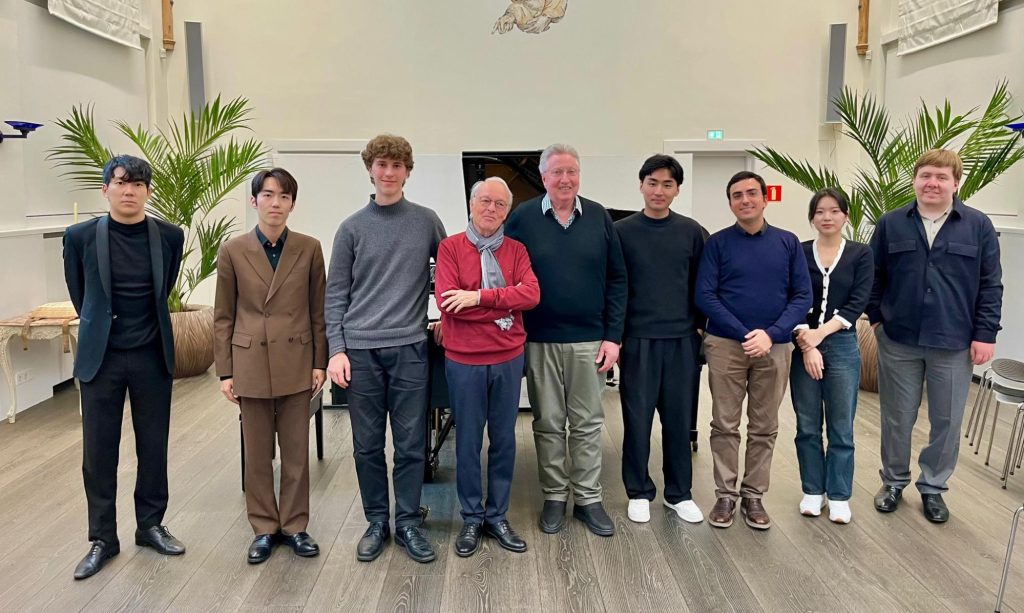
The finalists of Liszt Utrecht 2026 with masterclass instructors Andrea Bonatta and Leslie Howard.
The emphasis lies on stylistic awareness, sound culture and historical insight rather than mere technical display. Expanded further through an active programme of online masterclasses, Liszt Utrecht has become a forum for sustained pianistic dialogue.
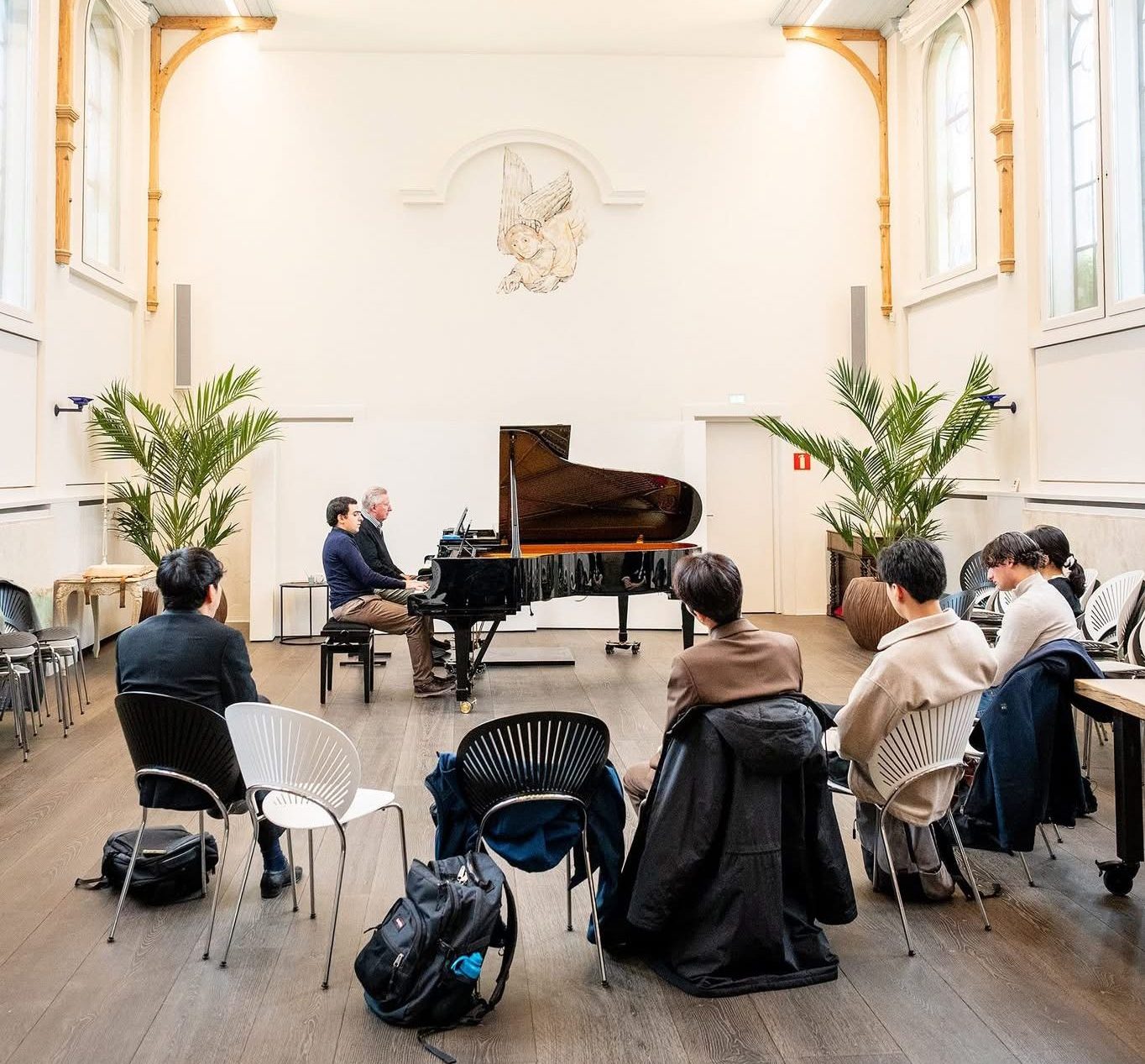
Masterclass with Professor Leslie Howard teaching Italian finalist Alberto Ferro
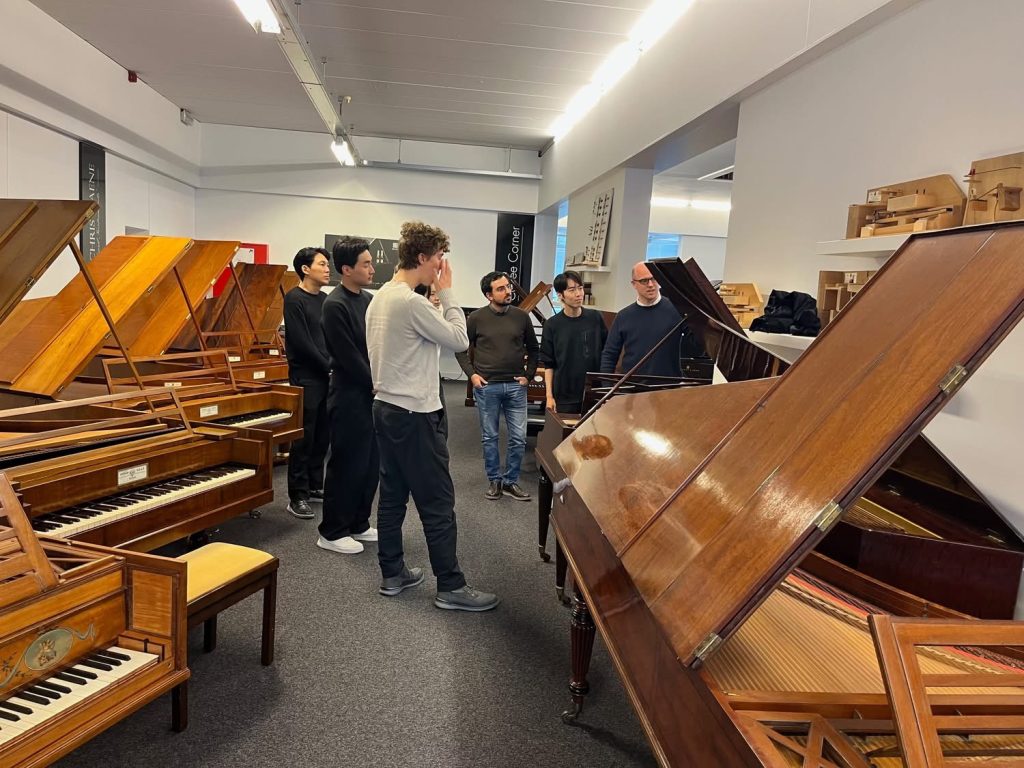
In order to create a bigger historical view of Liszt and his times, finalists were exploring Maene’s period instruments collection, found at their head quarters in Ruiselede in Belgium.
About Andrea Bonatta
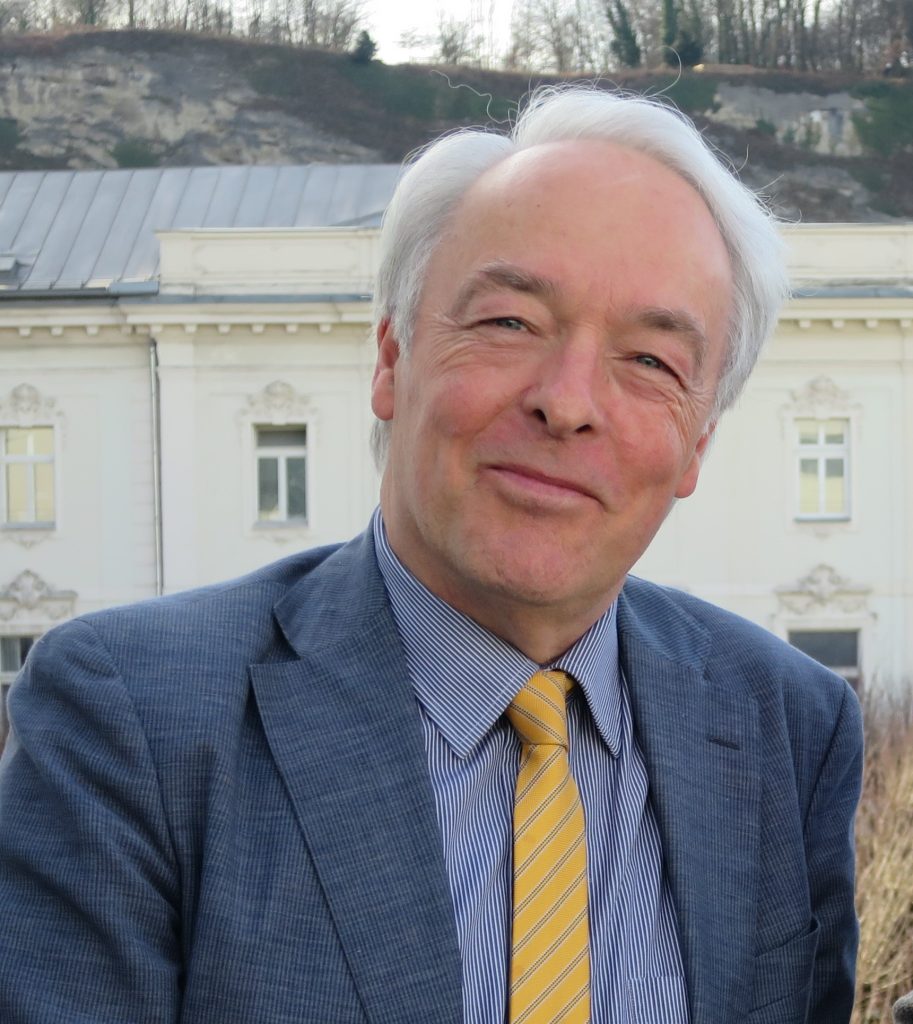 Among the musicians shaping how Liszt is taught and understood today, Italian pianist, conductor and scholar Andrea Bonatta stands out as a thoughtful and influential presence. Born in Bolzano and shaped by studies with Wilhelm Kempff and Paul Badura-Skoda, he brings a deep Central European tradition to his teaching and playing. His recording of the complete piano works of Brahms and his book on Brahms’s piano oeuvre — widely regarded as a standard reference — reflect a musician whose interests extend well beyond the stage. He served as Artistic Director of the Ferruccio Busoni International Piano Competition from 2000 to 2007 and has been Vice-President of the World Federation of International Music Competitions. In 2009 he founded the Piano Academy Eppan. A regular jury member at major international competitions and an Honorary Professor at the Shanghai Conservatory of Music, Bonatta continues to perform and has in recent years expanded into conducting.
Read more at andreabonatta.com
Explore the Late Visionary Liszt
These late piano pieces belong to Franz Liszt’s final creative period, where his style shifts dramatically from virtuoso brilliance to introspective, often experimental writing that anticipates 20th-century music. They may seem relatively easy to play but require highly sensitive interpretation and an inward-looking artistic vision.
En rêve
“En rêve” (“In a dream”) is quiet and floating, with an improvisatory feel. The harmony is delicate and blurred, creating an introspective, dreamlike atmosphere rather than dramatic narrative.
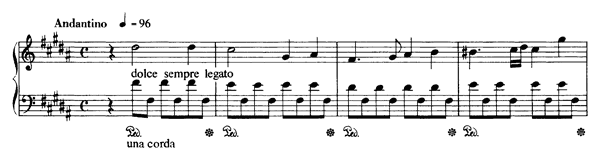
Abschied
“Abschied” (“Farewell”) is marked by restraint and melancholy. Its simplicity carries emotional weight, suggesting resignation and quiet parting, typical of Liszt’s late reflective voice.
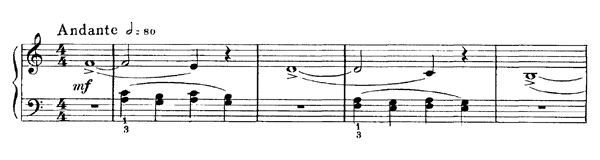
Sancta Dorothea
“Sancta Dorothea” has a devotional, almost prayer-like character. The texture is sparse and serene, reflecting Liszt’s growing spiritual focus and interest in sacred expression.
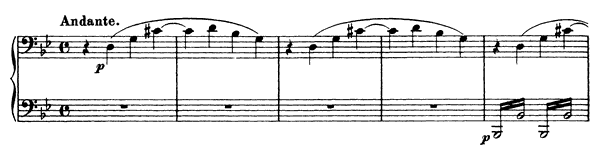
Nuages gris
“Nuages gris” (“Grey clouds”) is the most radical. It is brief, harmonically daring, and fragmented, with chromatic writing and unresolved tensions that point toward impressionism and modernism.
Stay in Tune with the Piano World
Join over 70,000 piano enthusiasts and get our exclusive monthly newsletter filled with classical piano news, inspiring articles, sheet music and other resources.
It’s FREE to join, and you can unsubscribe at any time.
Comments