Liszt Utrecht 2026: A New Chapter in a Legendary Competition
From a cold and snowy Stockholm, and perhaps carrying a grain of skepticism towards Carl Maria von Weber’s solo piano music, Piano Street’s Patrick Jovell landed in a spring-sunny Utrecht, Netherlands. Yet, as the 40th anniversary of the Liszt Utrecht festival and competition unfolds, the weather isn’t the only thing defying expectations. Thanks to a clever curatorial lens, a sunnier, more enlightened picture of Weber and his influence on Liszt emerged. We are on the ground reporting from a week where education, performance, and competition merge.
This article is continuously updated throughout the festival week. Check back for more news!
Last update: 6 Feb. 2026
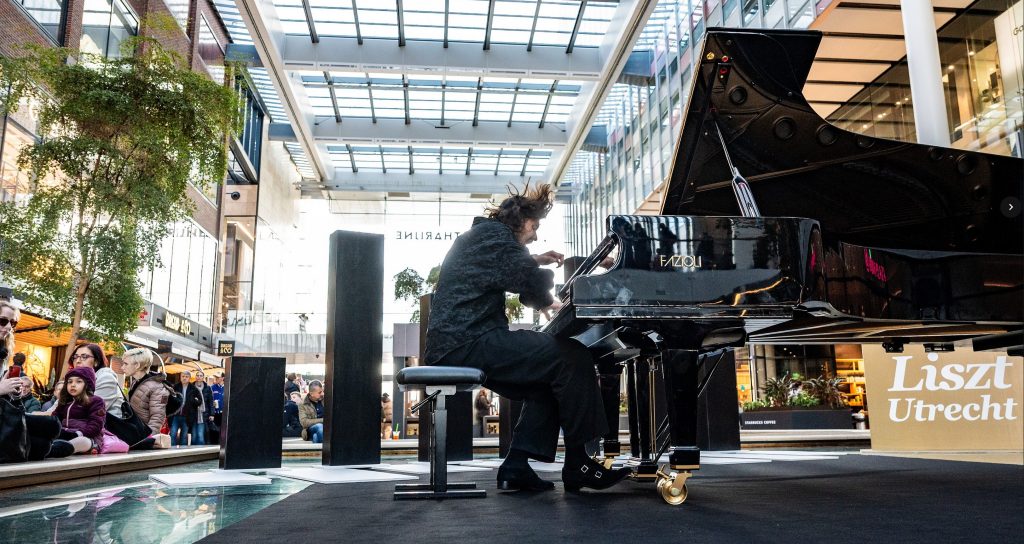
After its 2022 exploration of Schubert, the 2026 edition of Liszt Utrecht turns its attention to Franz Liszt’s artistic admiration for Carl Maria von Weber. The festival traces this lineage through Weber’s original piano and chamber works, set alongside Liszt’s virtuosic transcriptions of Weber’s operatic repertoire – a curatorial focus unfolds across a series of distinctive formats.
A dedicated Weber recital places his piano sonatas and transcriptions at the centre of the festival narrative, while A Night at the Opera, the opening concert, explores the piano as a theatrical medium through operatic transcriptions. Chamber music also plays a prominent role, with works by Weber and Liszt for piano trio, duo, and quartet highlighting the composers’ shared sense of drama and colour beyond the solo keyboard.
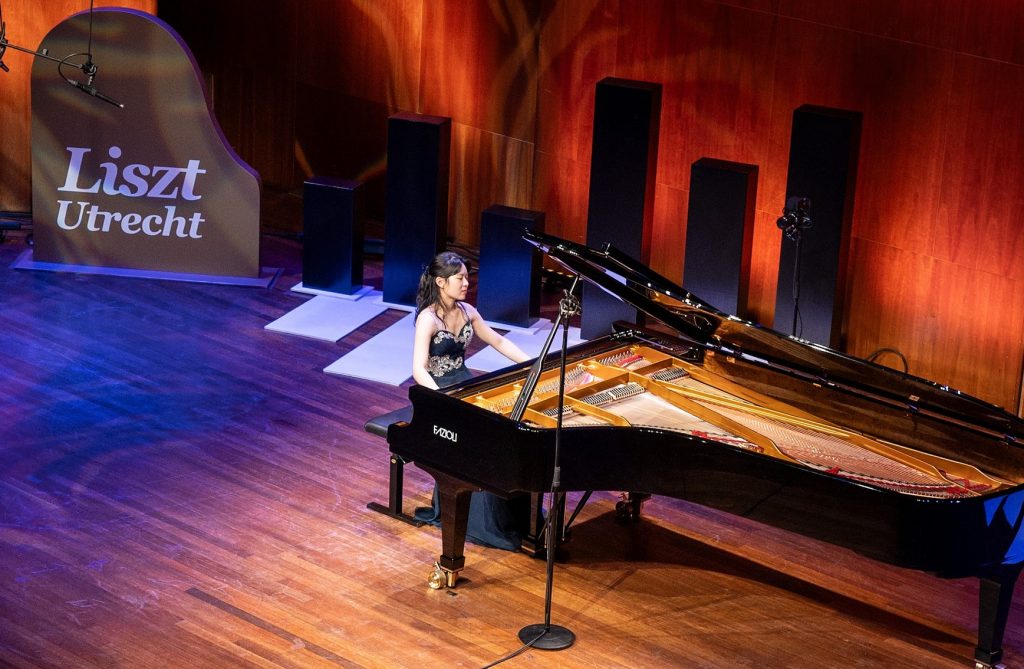
Sunah Kim’s contribution to the “Liszt Stories” series – played on a FAZIOLI – was titled “Light and Darkness” – a thematic recital that explored contrasts in Liszt’s music.
Several programmes place artistic imagination front and centre. In Liszt Stories, performers construct personalised recital narratives around one of Liszt’s lesser-known works, while the Liszt Sonata series revisits the composer’s B minor sonata as a paramount touchstone of the repertoire. The festival also steps outside the concert hall with Piano Promenade, offering the shopping mall Hoog Catarijne as venue for informal performances that bring the music into the public sphere.
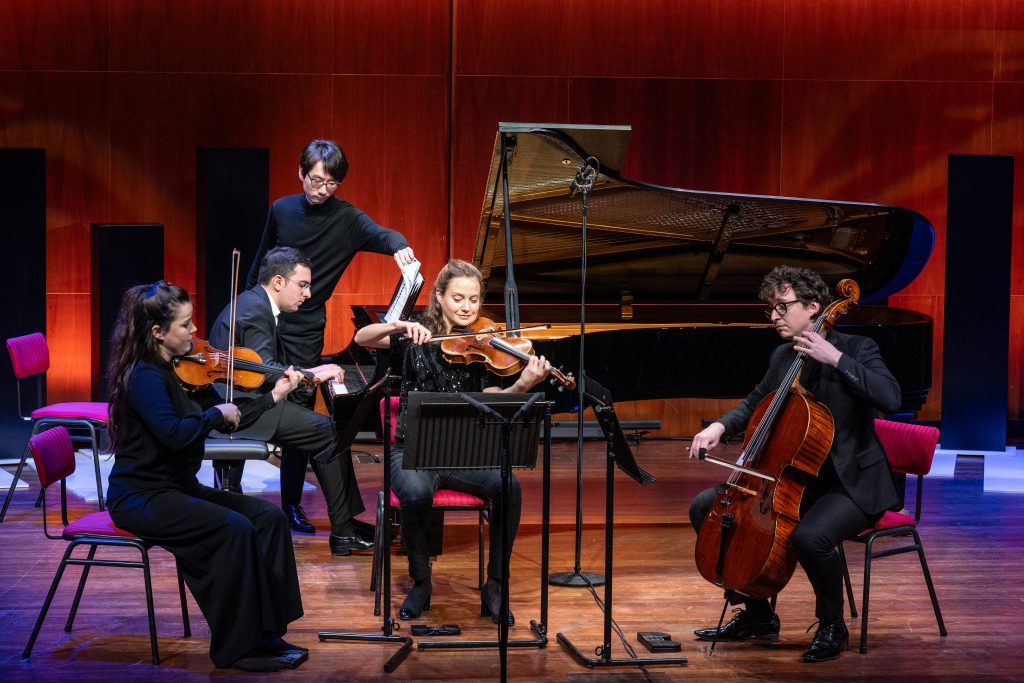
Alberto Ferro performing with members from the Amatis Trio in the Chamber music section of the festival. All contestants are required to perform chamber music by Liszt and Weber in Duo, Trio and Quartet setting. All on a Yamaha CFX.
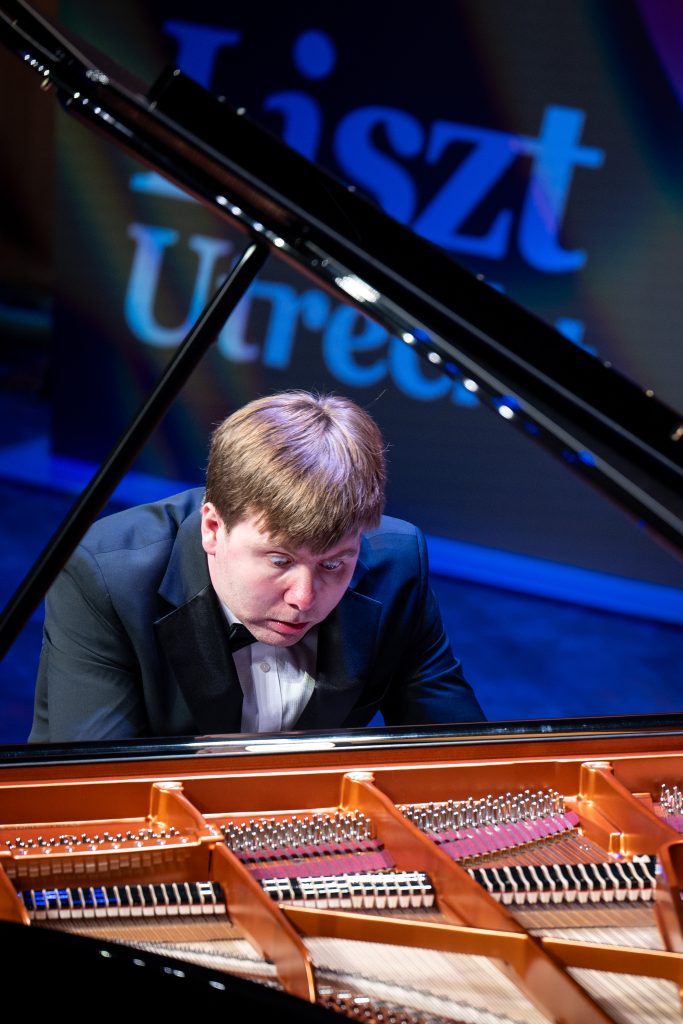
Thomas Kelly performing the B minor Sonata on Bösendorfer. Liszt’s magnificent master work was heard eight times during the festival, and the variety of interpretations were striking.
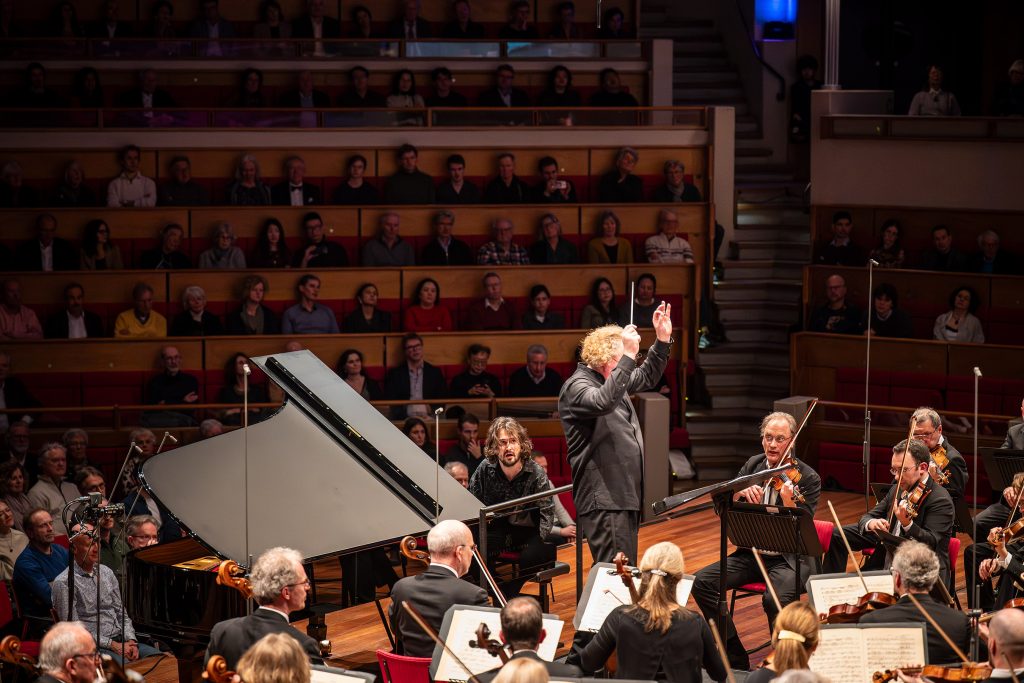
The winner of Liszt Utrecht 2026, plus the audience award; Alexander Kashpurin
Jubilee Concert: Liszt Utrecht at 40
Special treat: Hear 16 former laureates perform Liszt’s Grand galop chromatique in a 160 finger arrangement by Leslie Howard, timestamp: 2:56:30
To mark its 40th anniversary, Liszt Utrecht looks back – and forward – with a jubilee concert that reunites eighteen former prizewinners on the Utrecht stage. Across four decades, the competition has launched international careers and helped shape the modern Liszt tradition; this concert brings those stories into dialogue through music.
Pianists including Enrico Pace, Mariam Batsashvili, Yingdi Sun, and others return with repertoire that reflects defining moments from their competition years. The programme moves between personal landmarks and audience favourites, offering a layered portrait of Liszt Utrecht’s artistic legacy. A collective grand finale brings the evening to a close.
Impressions from the Festival
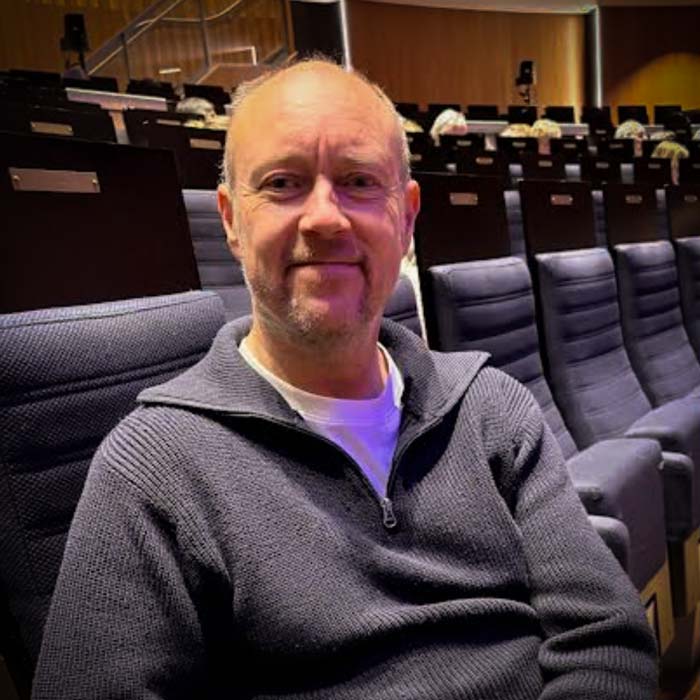
Patrick van Enschot, regualar festival visitor
Piano Street: Patrick, could you tell me what you think is good about this competition and festival, from an audience point of view?
Patrick van Enschot: I think it’s very diverse, in terms of the pieces played and the overall structure. It’s playful in a way. I think it’s less serious than other competitions, maybe. It feels very light, but still very serious at the same time. That’s what I like about it.
PS: Do you feel it’s more of a festival or a competition?
Patrick: A competition.
PS: Will you attend the finals?
Patrick: Yes, absolutely.
PS: Do you already have your favourite contestants?
Patrick: Yes, I do. It will be very interesting to see what happens. It’s never the same as the jury, but I definitely have my favourites – although they’re probably quite different from what the jury will choose.
PS: So this isn’t the first time you’ve come to this competition?
Patrick: No, I’ve been here many times.
Taking the Liszt Utrecht Ride
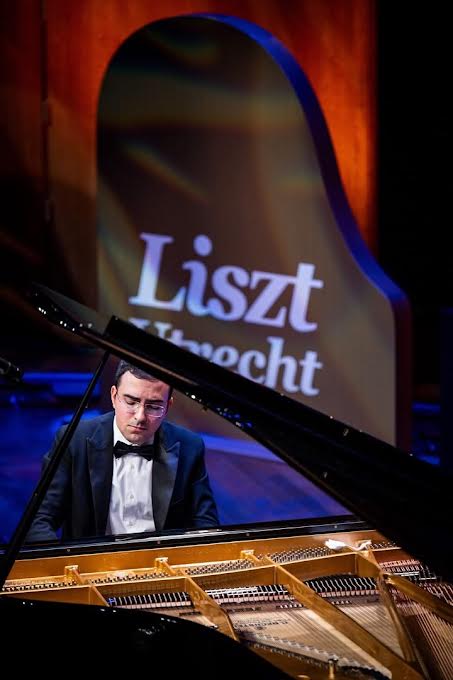
Alberto Ferro during the von Weber section.
With such an impressive program to be prepared, we asked Italian pianist and contestant Alberto Ferro about his impressions during the festival.
Piano Street: Thank you for your wonderful performances at Liszt Utrecht 2026. How would you sum up your experience at the festival and competition?
Alberto Ferro: Liszt Utrecht was an inspiring and demanding experience, one that I experienced as much as a festival as a competition. The atmosphere encouraged artistic exchange and openness, and the exceptionally high level of performances was both motivating and challenging. It was an environment that invited deep engagement with Liszt’s music and fostered personal artistic growth.
PS: I know you have participated in several competitions. What are the differences between competing in these different formats?
AF: Different competitions emphasize different artistic priorities, and this naturally shapes how one prepares and performs. Some focus on large-scale solo repertoire and endurance, while others highlight chamber music, concerto playing, or stylistic breadth. Adapting to these formats has helped me develop greater flexibility and awareness as a performer.
PS: What makes a good Liszt pianist?
AF: A compelling Liszt pianist combines technical command with imagination and a strong narrative sense. Beyond virtuosity, Liszt’s music requires depth of sound, structural clarity, and the courage to shape a personal interpretation grounded in a deep understanding of the score.
PS: What are you up to next in your pianistic life?
AF: Looking ahead, I am focusing on upcoming concert projects and further expanding my repertoire, including Liszt alongside composers that resonate strongly with me at this point. I am also eager to pursue chamber music and collaborative projects that offer new artistic perspectives.
The Hands Behind the Thunder
Behind every blazing octave run and whisper-soft cantabile in a Liszt performance, there’s aquieter kind of virtuosity at work. Long before pianists step on stage, piano technician Chris Taerwe is already deep inside the instrument – listening, adjusting, refining. At the festival, Taerwe is responsible for preparing the pianos that must withstand Liszt’s fearsome technical demands while remaining sensitive enough for chamber music and masterclasses. His work is largely invisible, but its impact is unmistakable.
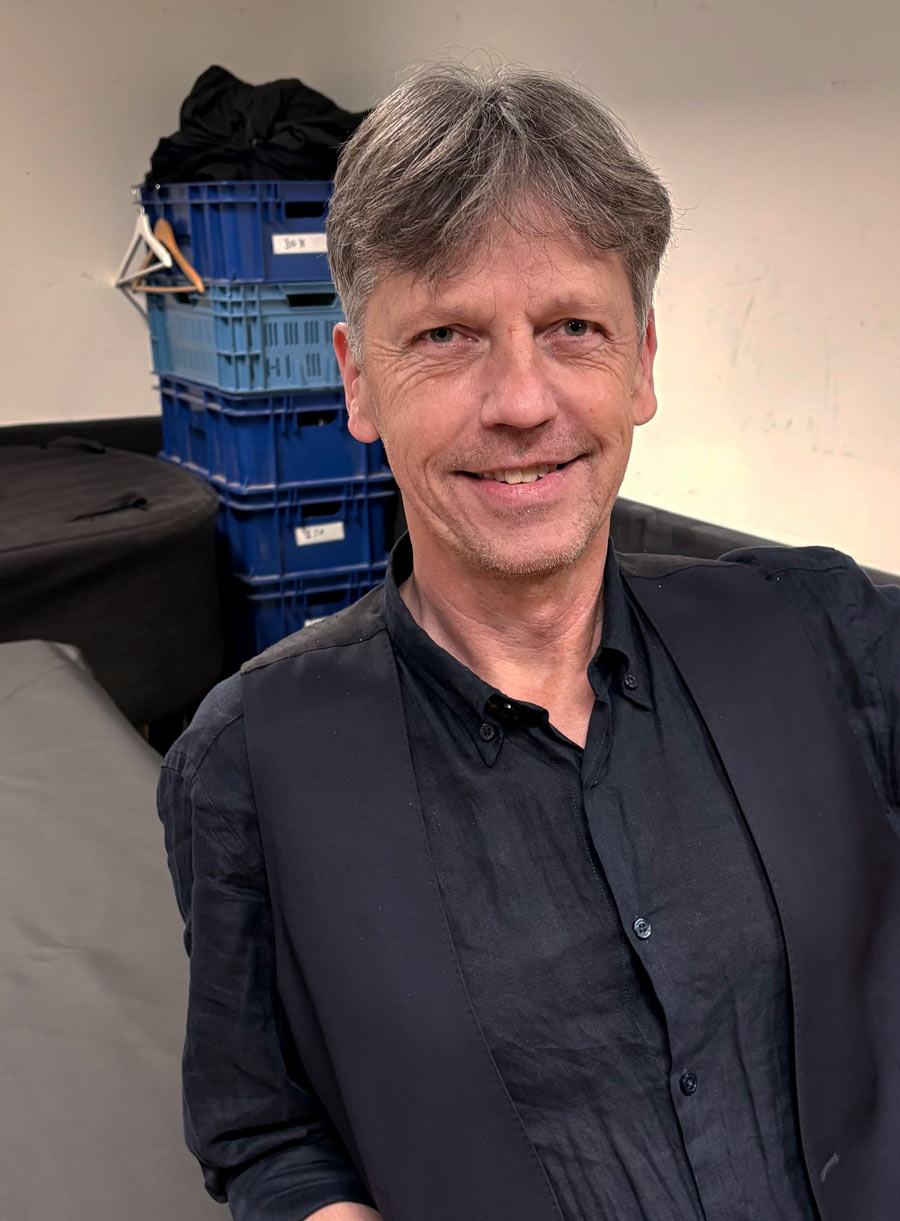
Piano technician Chris Taerwe
While audiences may imagine a single “ideal” concert preparation, Taerwe’s work shifts subtly depending on context. Masterclasses, recitals, chamber music, and competition finals all place different demands on a piano, but the distinctions are not as dramatic as one might think. Much depends on hammer intonation, carefully adapted to the acoustics of each hall. In recital settings, especially with solo Liszt programs, Taerwe tends to emphasize brilliance, ensuring the instrument projects clearly and confidently through dense textures and large spaces.
Repertoire also plays a role, though not always in ways that audiences – or even pianists – might expect. Decisions about which piano is used are ultimately subjective and often beyond the technician’s control. Taerwe and his colleagues can suggest instruments that may suit a particular artist or program, but the final choice lies elsewhere. The technician’s task, regardless of brand or model, is to make each piano function at its highest potential.
When asked what aspect of his work makes the biggest difference yet often goes unnoticed, Taerwe points to a final, almost ritualistic step. Just before the concert, he performs a specific handling of the hammers to subtly brighten the sound. It’s a last-minute refinement, imperceptible on its own, but crucial in helping the piano speak with clarity and presence under stage lights.
It’s the kind of detail few listeners ever think about – but without it, Liszt’s music would lose some of its fire. In Taerwe’s hands, the piano becomes not just an instrument, but a willing accomplice to virtuosity.
“I Felt Like a Messenger”
– Intervieiw with competition winner 2014, Mariam Batsashvili on Liszt, legacy, and the spiritual core of pianism
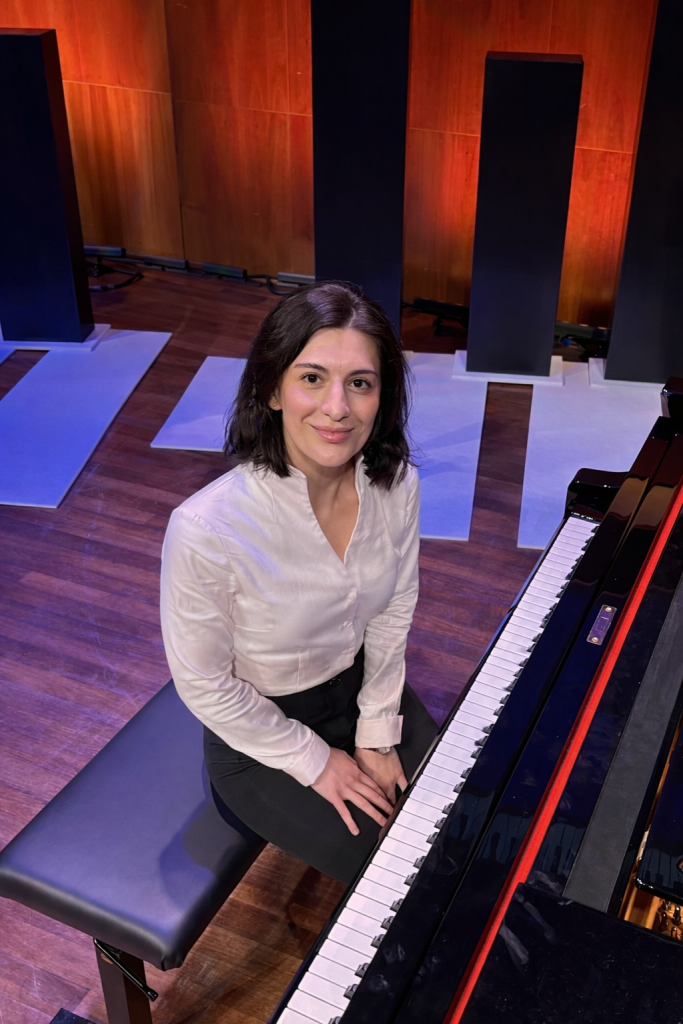
Mariam Batsashvili, laureate of Liszt Utrecht and jury member.
Twelve years after her breakthrough at the Liszt Utrecht Piano Competition, Mariam Batsashvili reflects on a career fundamentally shaped by that moment. “My whole career has changed since my win,” she says. What followed was an intensive three-year international touring period, appearances across more than thirty countries, and a web of artistic connections that continue to define her professional life.
For her, the Liszt Competition was decisive. “It was a door-opener to the kind of career people dream of in this profession.” Invitations soon followed from the ECHO Rising Star programme and the BBC New Generation Artists scheme. “All of this came after the Liszt Competition. I am — and will be — eternally grateful. That was the beginning of my career.”
It was not her first competition experience. After earlier success at the Liszt Competition in Weimar in 2011, she returned to Utrecht three years later. “Career-wise, it was probably the best decision of my life.” Preparation was thorough — more than a year — but she is frank about the psychological strain. “When you’re on stage, with a live audience, a livestream, and a jury taking notes, the pressure is extremely high.”
Fear, doubt, and imposter syndrome were ever-present. “At some point you think you don’t know anything and ask yourself, *What am I doing here?*” What sustained her was a profound connection to Liszt himself. “I love Franz Liszt — his music and him as a human being. To represent his music felt like the highest honour. I felt like a messenger, or a mediator, bringing his music to people.”
One such moment of crisis came during the semifinals. “I walked on stage, saw the piano and the audience, and felt the silence. I thought, *I cannot do this now.* Then, in one second, I reminded myself: *You have a reason to be here.* That changed everything.”
Her relationship with Liszt’s music began early. At thirteen, she encountered the composer through virtuosic works such as *La Campanella* and the Second Hungarian Rhapsody. Her teacher, Natalie, initially allowed her to explore the technical brilliance. “But very quickly she led me deeper. I realised it was not about showing off at all.” Virtuosity, she insists, is merely a means. “It is just a tool — one of many — used to express something.”
Liszt remains central to her musical identity, even as her repertoire ranges widely. “I adore the Viennese classics, the Romantics, Baroque music — but Liszt will always have his place in my heart.” His influence reaches beyond music. “Music is not a standalone art. It helps us understand life. There are philosophical and metaphysical questions I cannot answer with language, but music comes closer.”
This belief led her to doctoral research in Graz, studying with Till Fellner and Andreas Dorschel, with Leslie Howard as external advisor. The research grew from a deeply personal experience. While preparing *Bénédiction de Dieu dans la solitude* for the 2014 competition, she experienced a profound shift. “Something clicked in me, and I became vegetarian.”
Liszt himself was not vegetarian, which made the transformation all the more puzzling. “I asked myself, What happened?” Reflecting on the work’s spiritual message, she began questioning human exceptionalism. “Why are humans the only ones considered blessed? I came to feel that love — or divine energy — does not distinguish between humans and animals.” The experience convinced her of music’s power to transform. “That was my own example.”
Liszt’s life, she believes, is often misunderstood. The nine-year period of Lisztomania has obscured his deeper spiritual trajectory. “People call him superficial because of that period, which is unbelievably unfair.” Liszt’s spiritual inclinations, she notes, were lifelong. “He wrote on religious themes and nearly became a priest. He was complex, flawed, and deeply spiritual.”
As a juror today, she listens closely to how young pianists approach Liszt. “This variety is what keeps Liszt alive.” Yet she draws a firm distinction between imagination and ego. Recalling Liszt stopping a student during Chopin’s *Heroic Polonaise*, she cites his words: *‘I do not want to hear how fast you can play octaves. I want to hear the cavalry.’* For her, the message is timeless: “Liszt was interested in fantasy and meaning, not display.”
The B minor Sonata occupies a central place in her thinking. “For me, it is one of the most important works in musical literature.” Her research focuses on its ambiguities, particularly Liszt’s use of identical material for moments of beauty and terror. “Why does he use the same material for the most beautiful and the most frightening ideas? These questions are endlessly fascinating.”
Beyond the concert hall, she has reached a wide audience through short Instagram instructive piano lessons, a project born from loss. After the death of her teacher Natalie, she sought a way to continue that pedagogical lineage. “I wanted to show rather than talk.” Kept under a minute, the videos focus on listening, touch, and sound — fundamentals she believes are often neglected. “The piano can produce endless colours. Why bang it, when you can create something monumental through listening?”
See mariambatsashvili on Instagram
With more than seventy-five thousand followers, her online presence continues to grow. Yet her focus remains unchanged. “Whatever I do, I do passionately. I am grateful that I can live from my profession and follow what truly matters.”
For her, Liszt is not merely repertoire. He is a spiritual companion, a challenge, and a responsibility. “Once you remember why you are there,” she says, “you can always go on.”
The Livestreamed Final
The final concert is livestreamed on Liszt Utrecht’s YouTube channel, starting at 19:00 GMT:
youtube.com/@lisztcompetition/streams
The Finalists: Three Voices, One Stage
Watch the Grand Finale streamed live from the Grote Zaal, TivoliVredenburg on 24 January 2026, as the International Franz Liszt Piano Competition & Festival reaches its climax. After days of festival recitals, chamber concerts, and solo performances that have unfolded, the jury has selected three outstanding pianists to contend in the finale:
Thomas Kelly – the British pianist whose interpretations have been praised for their expressive range and structural clarity.
Kang Tae Kim – representing South Korea, known for his rich tone and commanding technique that bridges sheer virtuosity with deep musical insight.
Alexander Kashpurin – a Russian pianist whose performances have drawn acclaim for their dramatic sweep and thoughtful nuance.
These three will perform with the Netherlands Radio Philharmonic Orchestra, under the baton of conductor Stéphane Denève, choosing either Liszt’s Piano Concerto No. 1 or No. 2 for their concerto appearances in the Grote Zaal of TivoliVredenburg.
To help you get ready for the big night, we caught up with some of the key figures behind the competition and past winners to ask why this Grand Finale is a must-watch. Here is what they had to say about the three finalists and the magic waiting for you on stage—read their insights below and join us for the livestream!
 “I think people should listen to the livestream, because we have three very exciting artists who are completely different from each other. We have Alexander, who is magical, artistic, and spiritual. Then we have Thomas, who is very honest with music, and he focuses only on music. He is the kind of pianist you can just sit down and listen to and enjoy. Then we have Kang Thai, who is a very exciting artist because he manages to maintain tension from the first note to the last in his performances, which makes the music very, very lively.”
Mariam Batsashvili, competition winner 2014 and jury member
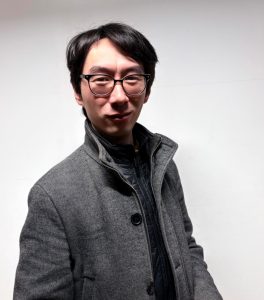 “We’ve got three very unique personalities in this year’s Finals. The creativity they’ve shown during the Festival has been absolutely delightful and I can’t wait to hear what they do with the concerto.”
Mengjie Han, 3rd prize and Audience award winner 2014
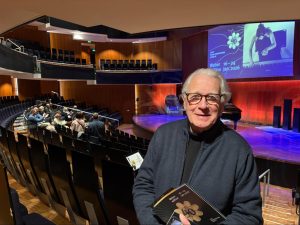 “The three pianists who have made it to the final are technically gifted accomplished musicians. But who will rise to the occasion? Who will touch you, engage your emotions and send you home with a memory that will last a lifetime?”
Jeremy Nicholas, Writer, Gramophone, International Piano
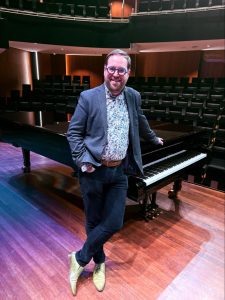 “I highly recommend to watch the Finals of LISZT UTRECHT 2026 because it is going to a fantastic concert, with a great orchestra – The Netherlands Radio Philharmonic – conducted by Stephane Denève with three amazing pianists. Over the course of the last 6 days these three, as well as the other 5 pianists, have been giving truly magnificent performances. They have demonstrated that we are dealing here with truly unique voices and original programming. That is why would highly recommend to rewatch their performances, which are all available on our YouTube page.”
Director of the International Franz Liszt Piano Competition (Liszt Utrecht)
Photos cortesy of Liszt Utrecht & Patrick Jovell
Stay in Tune with the Piano World
Join over 70,000 piano enthusiasts and get our exclusive monthly newsletter filled with classical piano news, inspiring articles, sheet music and other resources.
It’s FREE to join, and you can unsubscribe at any time.
Comments