The Prodigy Who Saw Into the Future – Lili Boulanger’s Piano Music
A teenage girl with forward-looking ideas, Lili Boulanger had enough determination to successfully navigate the competitive, patriarchal, and conservative music scene of Paris. Despite a constant fight against illness, she achieved great mastery as a composer, and left behind a significant catalog of works characterized by intense emotional depth, in a sophisticated, post-Romantic, Impressionist style. Now, all her scores for solo piano are available to Piano Street’s members.
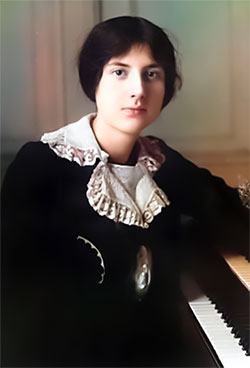 Lili Boulanger’s unusual musical talent showed itself at a very young age – when she was two years old she was able to sing and imitate melodies, and she learned how to read sheet music before the alphabet. Gabriel Fauré, a family friend, observed that she had absolute pitch. Unfortunately, at the same age had a severe lung infection, from which she never completely recovered; her health remained unstable for the rest of her life.
At the age of five, she began taking lessons in harmony at the Paris conservatory. A few years later, she started to accompany her older sister Nadia to organ lessons with Louis Vierne. She also sang and played piano, violin, cello and harp.
First woman to win the Prix de Rome
Both sisters were already trying their hand at composition. Lili’s two Preludes for piano, in D-flat major and B major, were composed when she was 16. A year later she competed for the first time for the prestigious Prix de Rome.
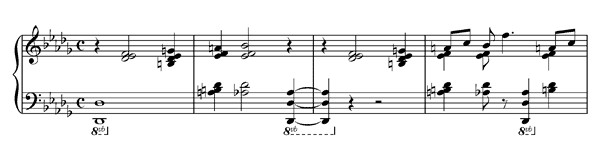
Her first attempt was unsuccessful but she did not give up, and the following year she managed to win the support of thirty-one out of thirty-six jury members, becoming the first woman musician admitted to work in the beautiful surroundings of the Villa Medici in Rome. This became a particularly happy time, reflected in her Trois Morceaux pour piano:
Unfortunately, the outbreak of the World War I prevented her from staying the full length of the residence. The difficult times that followed obviously influenced the mood of the young composer.
Her last piano piece, Thème et variations, finished in 1915, is a dramatic and extremely dark work. In the years that followed Lili became very weak and ill; she died on the 15th of March 1918 at the age of 24.
Stay in Tune with the Piano World
Join over 70,000 piano enthusiasts and get our exclusive monthly newsletter filled with classical piano news, inspiring articles, sheet music and other resources.
It’s FREE to join, and you can unsubscribe at any time.
Comments